A Tragedy, Not of a Greek Tragedy Nor Shakespearian Nature, but a Tragedy Nonetheless.

When I considered writing about my recent and very significant tragedy, the first thought that popped into my head were the words, “Greek Tragedy and Shakespearian Tragedies”. Well, very quickly I realized my lack of writing skills! The first of which is “1 – Language: Shakespeare (or whoever really wrote the plays) wrote in iambic pentameter within a sixteenth century style of English. The Greek tragedies, of course, were in neither English nor iambic pentameter but in common Greek.”(1) I do remember hearing about iambic pentameter and failed miserably in my English classes trying my hand at it! As for common Greek, well, it is all Greek to me.

Secondly, ” 2 – Subject: Most of Shakespeare’s subjects were real people. He got many of his characters from “Holingshed’s Chronicle” and other historical volumes. Some Greek tragedies dealt with real people but had a tendency to veer to gods and goddesses and those with almost superhuman determination or strength.“(1) I am most definitely real people, but I will not even pretend to be a god or have superhuman traits.

Thirdly, ” 3 – Endings: Shakespeare’s endings were more more realistic. The Greek’s loved “deus ex machina” (god from a machine) for their happy endings. As our hero or heroine got deeper and deeper into plot problems, a hand-lowered contraption with a actor as “god” inside would magically make everything great again.”(1) The ending to my tragedy has not yet manifested itself, but, I do have a pretty good idea where/what it might be and address minimizing future tragedies.

 (1) https://www.quora.com/What-are-some-similarities-and-differences-between-Greek-tragedy-and-Shakespearean-Tragedy#:~:text=Greek%20tragedy%20is%20typically%20written,asides%20spoken%20by%20individual%20characters. I am sure my attempt at proper attribution for the quoted sections above will keep me out of plagiarism court or from ridicule at Harvard.

This is both a personal tragedy and a tragedy to an important inanimate object, yet, an important object in my life and nearly essential to my well being. My kegerator died an early but under the circumstances, not an unforeseen death. Building my kegerator was a labor of love as well as an exercise in creativity. The base element was a “used refrigerator with a top door freezer section. The used element…..the good and the bad, cost was attractive but the condition of the refrigerator was a big unknown and a key element in the tragedy.
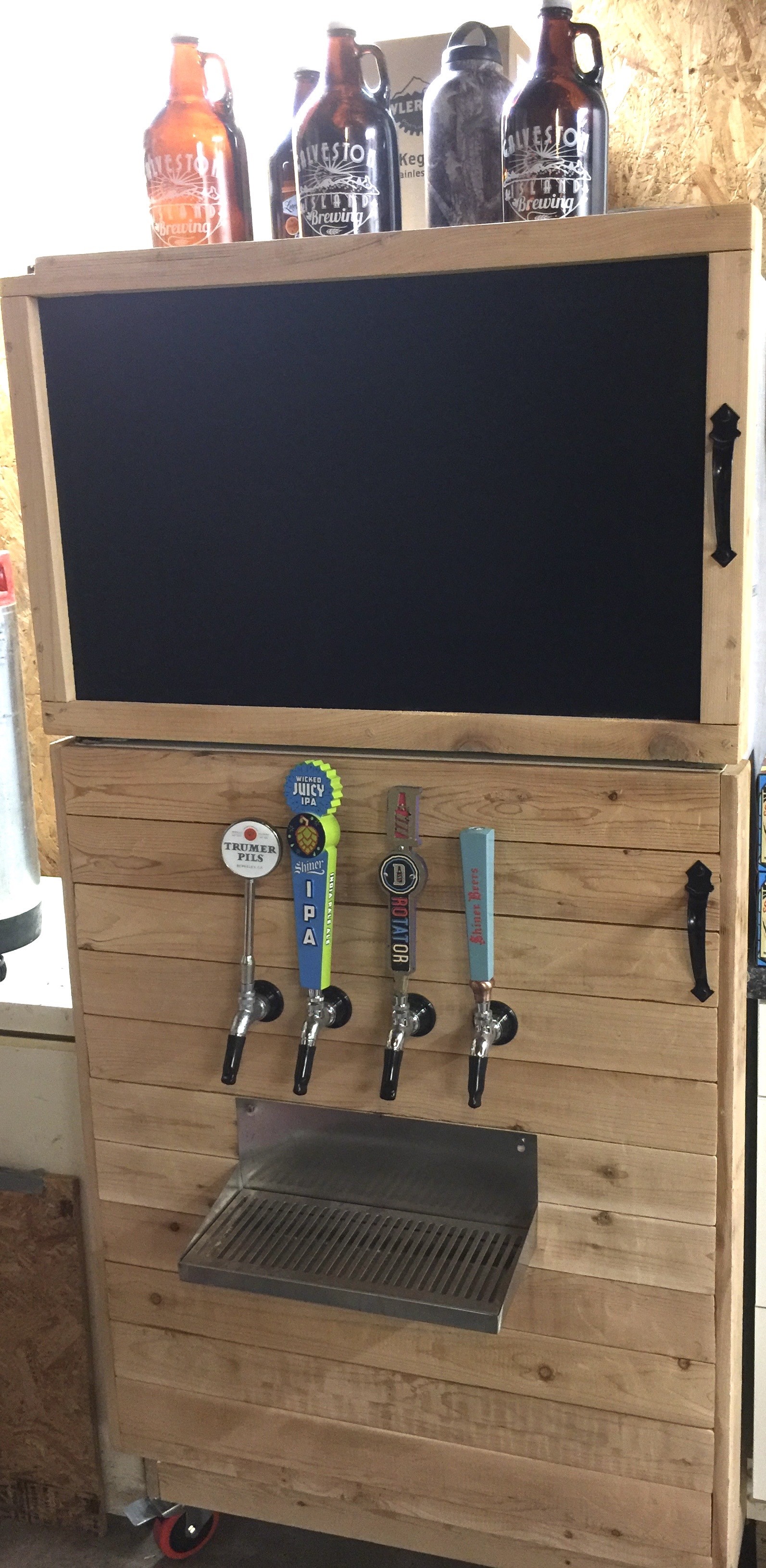
The finished product. Four taps available and aesthetically pleasing with it’s covering in rough cut 1X4 cedar boards. I left without finish for a rustic appearance. The top freezer section was finished with chalkboard paint. Handy for designation of which particular essence/nectar of the gods is on tap.
Four Cornelius 5 gallon kegs fit very nicely into the comfy, cozy and chilly home. When equipping my kegerator I also purchased an Sanke valve set up so I could also tap commercial style kegs.
Sanke valve vs. ball lock type connectors on Cornelius kegs.

Now the tragedy to my beauty, my refuge and to my love of sharing the essence or nectar of the gods with friends & family was ripped from my heart in a tragic and untimely demise. The heart of every refrigerated device is the compressor. We/I had a massive heart failure and, although repairable, less expensive than a medical repair, it is still costly……. the estimate was a potentially costly $ 797.66 and it could be almost as good as new……! Now, my dilemma, spend nearly $ 800 to put it into working order but still used!!!!! Or, at my leisure, my labor is essentially free, strip the cedar off the original project and install on a brand new refrigerator costing less than $ 700 new, replumb the lines, FYI there were some lessons learned there that will be incorporated into the new project, hopefully creating a very long lasting kegerator! …….Hmmmmmmm what is a beer drinker to do????? Better have a beer to facilitate this difficult choice.

Drink Local and Drink Responsibly

Bishop
Homebrewing & Mopping the Floor

My wife is usually pretty happy when I brew beer because, due to my messiness, I have to mop the kitchen floor after each of the several steps in the process. I think it is only right that I take care of my duties and I can’t think of a woman who would not be happy with her husband mopping the kitchen floor!

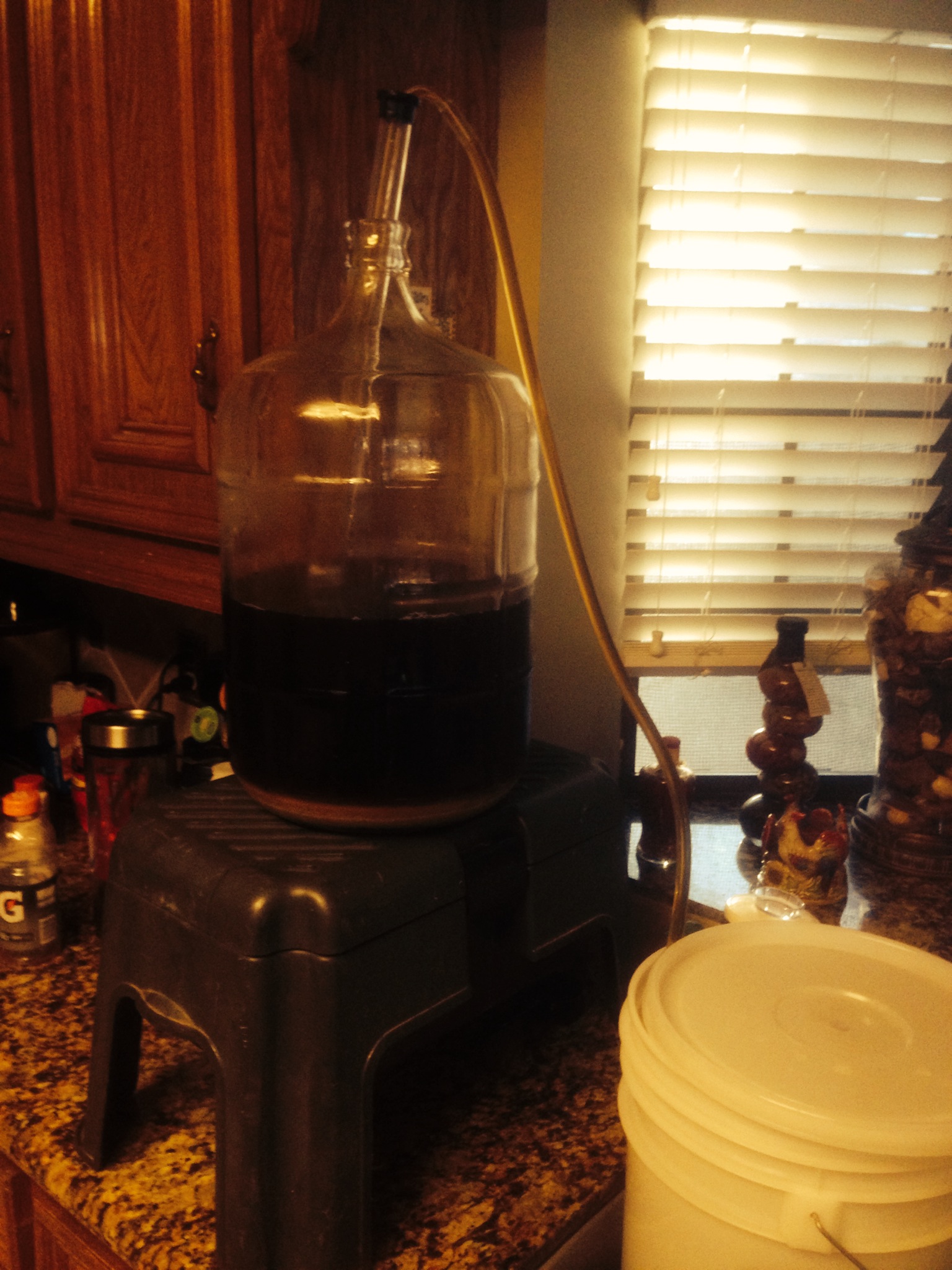
Last night I was at the bottling stage and as always I had planned on mopping up the few spills and drips that are common to the process. Well, the task of mopping morphed into a industrial clean-up due to an unusual string of clumsy moves on my part! The mess started small and manageable. My 6 gallon priming tank that you can see in the picture below, had a loose connection at the outlet spigot….I didn’t check it before I began to fill the tank. The drip was slow…I attempted to turn the spigot to tighten I but to no avail. I really needed to hold the inlet side, now under about 3 gallons of beer, in order to properly tighten it…..I opted to manage the very small quantity dripping with an absorbent towel….no big deal. I did not want to potentially contaminate the beer by sticking my arm in the brew.

The first bottle to be filled was the 6L plastic mini-keg bottle from my Tap-a-Draft set-up. I got it filled and set off to the side as I switched to filling the 12 ounce bottles – 29 of them! The 6L bottle sat with the chilled beer in it and developed a wet surface due to our humidity and the condensation on the outside. (Note: I had crashed to temperature to 34 degrees F to drop out the sediment and help clarify the beer)

Once the glass bottles were safely filled I decided to pick up the 6L bottle and dry it before moving to the location I use while the beer conditions. I wanted to make sure that it didn’t slip out of my hands…….noble thought but poorly executed. Beer weighs about 2.2 pounds per liter or 1 kg per liter. ( Just gotta love the simplicity of the metric system!) That would be 13.2 pounds or 6 kg! I was amazed at how high it bounced the first time it hit the tile floor. The second bounce had me in motion to capture the precious container, filled with my lovingly crafted beer. At age 62 I was just a little too slow. I captured the container when it hit the tile floor the third time, popping the cap off and spraying beer across the kitchen floor. I did manage to slap my hand over the opening after at least a 12 ounce bottle’s worth covered the kitchen floor. (355 ml)

I had no idea where the cap had shot off to and hollered for some help….I tried not to look my wife in the eye when she saw my predicament! I needed that cap and had to ask for help…..well, she found it off into the dining room on the carpet.  My tragedy was growing. The cap had broken but fortunately I had a spare in my kit in the kitchen and a bowl of sanitizing solution to dip it in before capping the bottle. I think I saw a look of disgust on her face, not sure though…..as she gave me some very specific clean up instructions!

When we were first married some 30 years ago, we found fun things to do while the floor dried after mopping…..She wasn’t in the mood this  January 14th of 2014. I was nearly done with the mop up when “Murphy’s Law” kicked in…As I was moving some things out of the kitchen I bumped the graduated cylinder holding the sample I collected for checking the final gravity – I had read and recorded the gravity so that wasn’t so bad, but I did lose half the sample….I wanted more of a taste. My other fear was breaking the hydrometer but I was quick enough this time to catch it before it hit the tile floor.

After mopping, wiping down the cabinets, cleaning the rugs and counters I managed a taste test. The aroma is great and the bitterness is nice….Now I just have to be patient for a couple of weeks to allow the beer to condition and mellow.

I am so glad she loves me!

Transferring from the secondary carboy to the priming tank/bucket.

Transferring from the secondary carboy to the priming tank/bucket.

Drink Local and Drink Responsibly

Give up your keys when asked!

Bishop