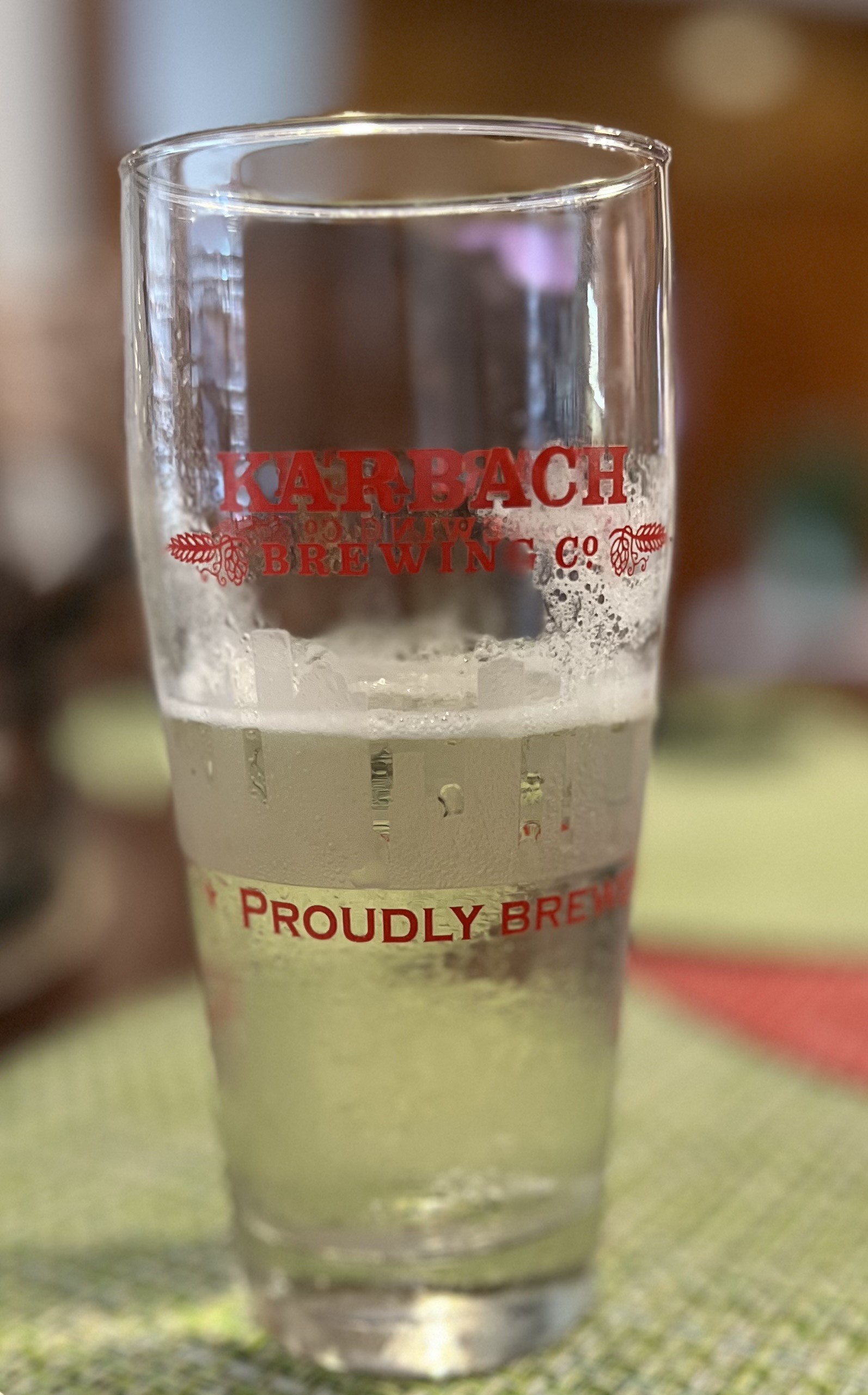
One more time and I think I hit a winner. I used 1 gallon of spring water, pH dropped to 3.67 with citric acid and added 12 grams of Mosaic hops. I dry hopped it overnight in the refrigerator. My last batch used less than 12 grams per gallon and it was pretty good. I decided to bump it up to a full 12 grams and it is a winner. Color a bit more yellowish green than past batches but the biggest change is the hop flavor and a better hint of the hops aroma……….yes it really stood out.
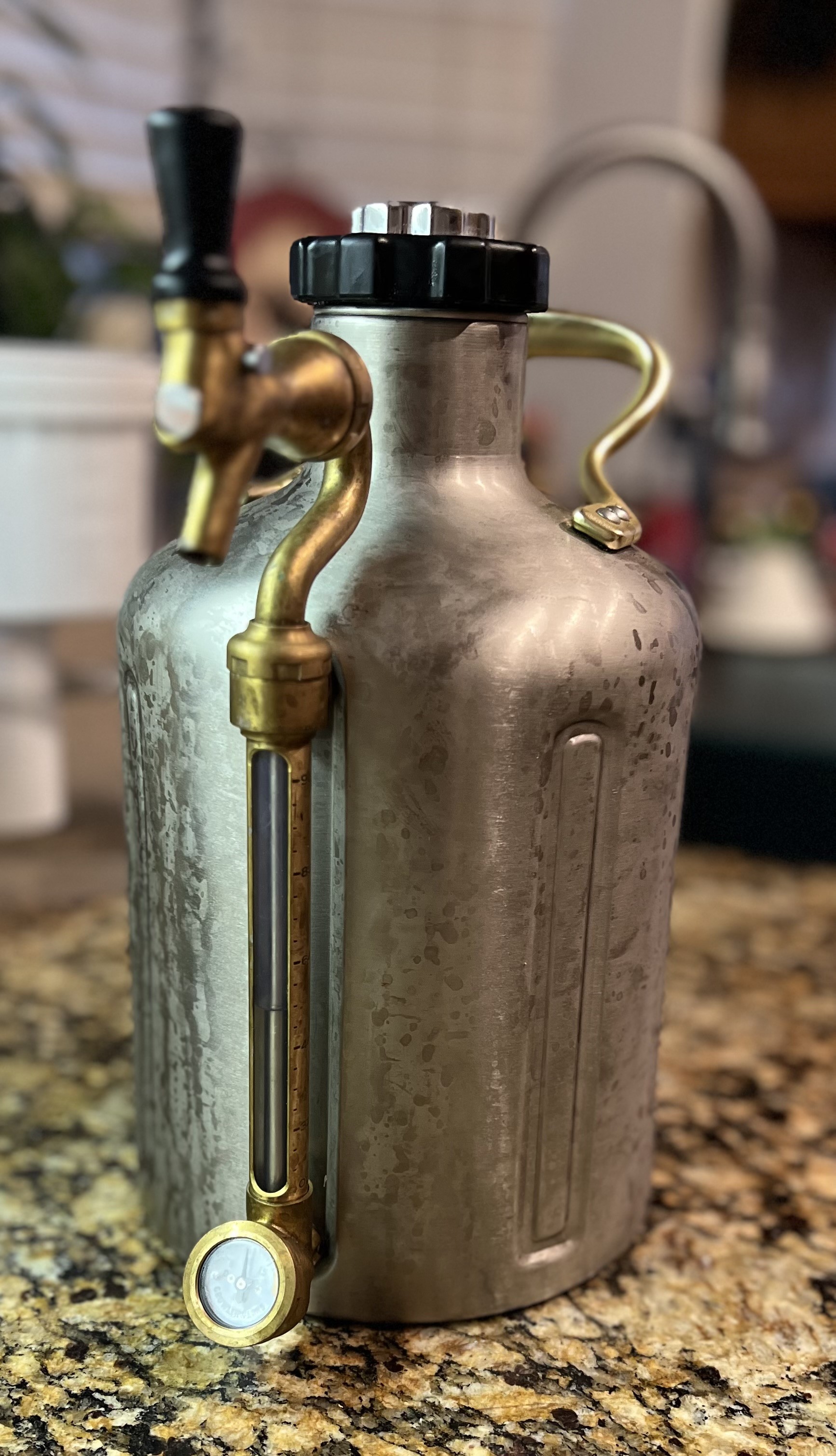
I will continue to experiment and push the boundaries a bit. I won’t go for big jumps in how much hops to use but I will creep up in a controlled manner until I find the sweet spot where the essence of the hops shines without being overwhelming. My Growler Werks 128 oz. mini-keg does a more than adequate job with carbonation.
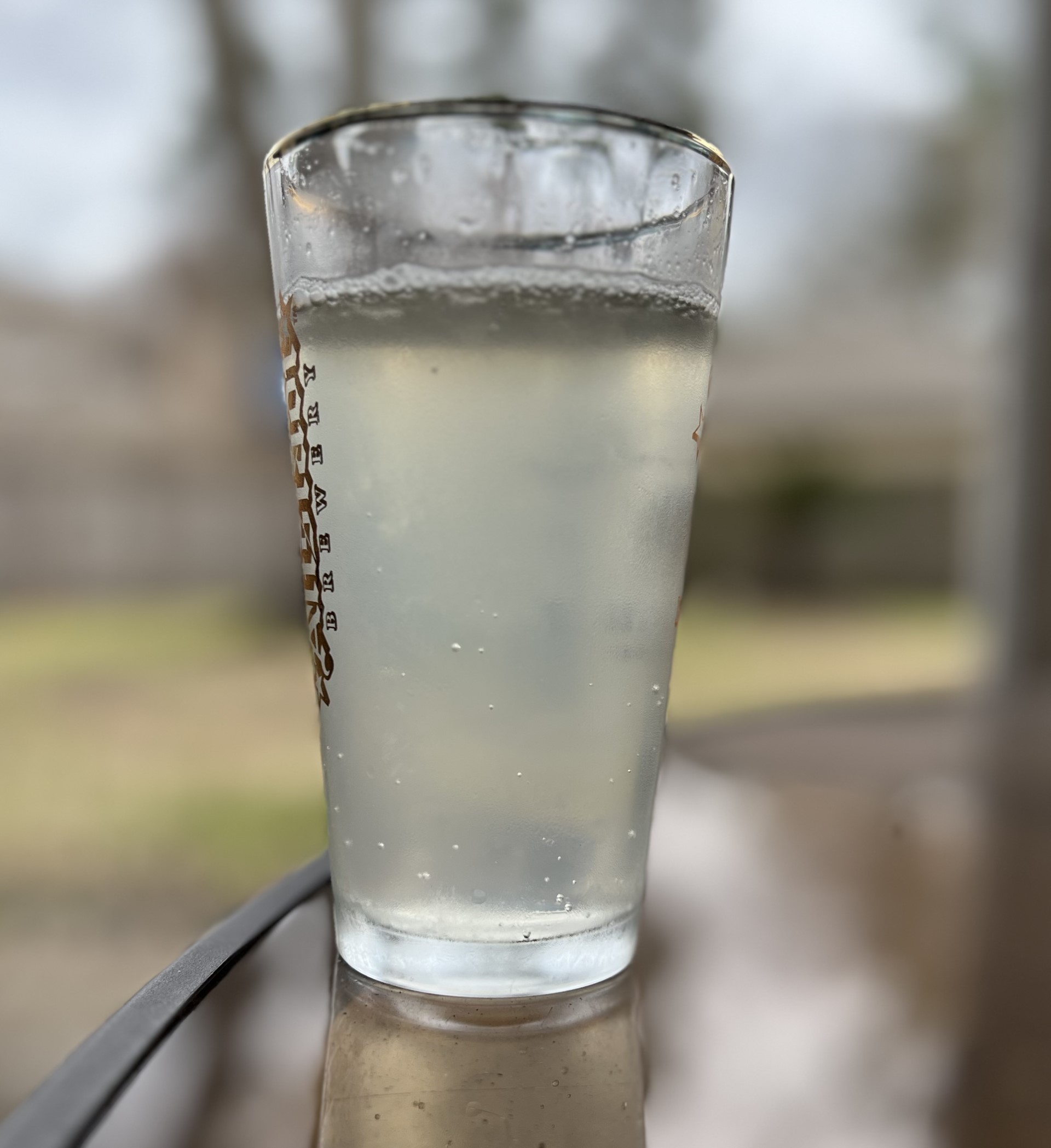
The color is subtle and the flavor/aroma is a perfect essence without being overwhelming. It is a very satisfying drink. I tried a splash of lemon juice on a prior glass but not this one……almost perfect even without the lemon juice.
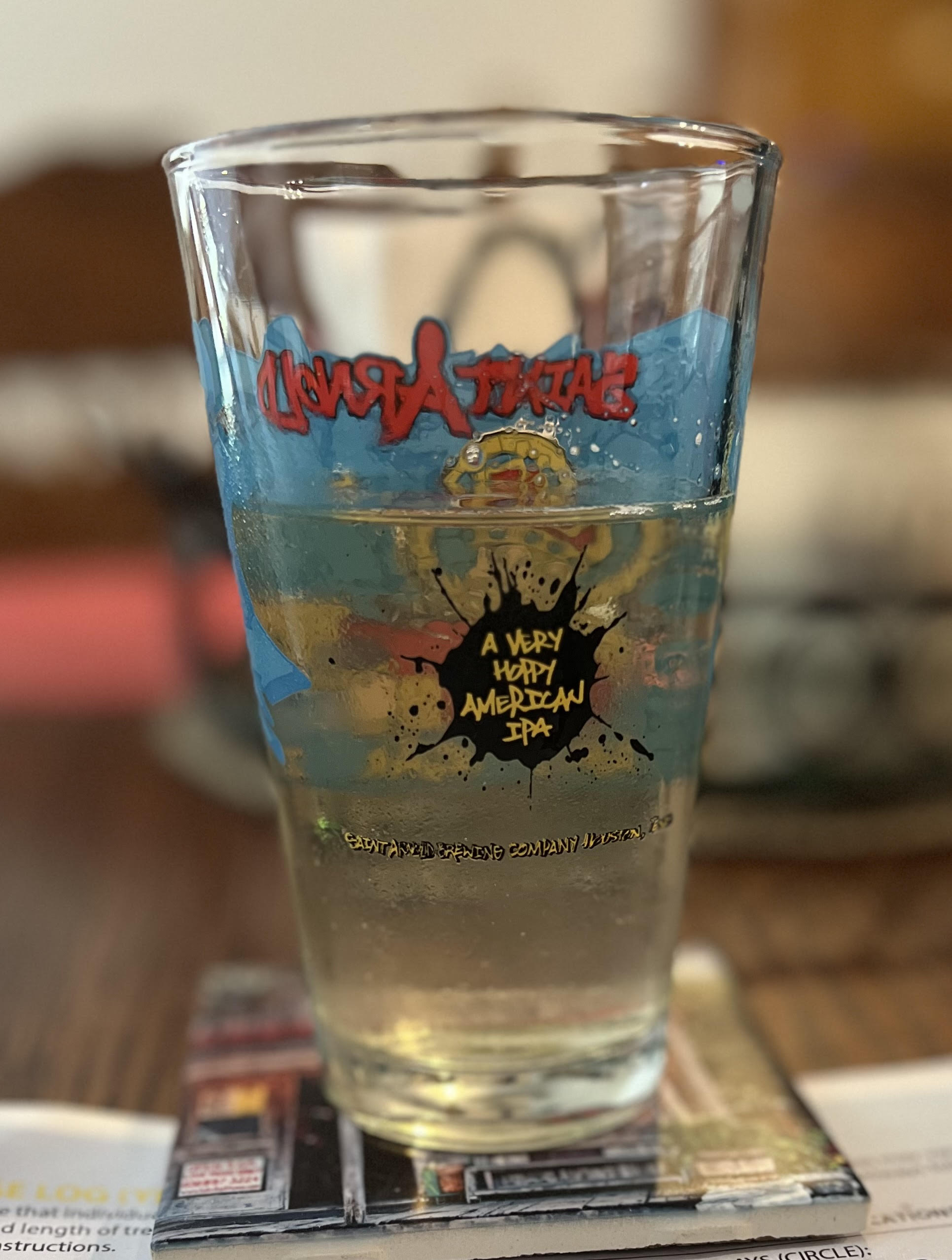
What happened to batch 3? Good question. Batch 3 was finished and added to the 1 gallon Growler Werks mini keg. My writing took a back seat due to back to back visits of grandsons. First week were the 2 under the age of 4 and the next batch of grandboys were in from Denver, similar ages. They kept me busy, but not so busy that I did not have a chance to enjoy batch 3……Batch 3 was made with 9 grams of Centennial hops. Used citric acid to lower the pH to 3.15…….some lessons learned here with amount of citric acid needed. FYI it does not take very much and it takes a lot of water to bring it up from pH 1.8!!!!!!!Batch 3 was dry hopped at a chilled temperature for about 24 hours. Results -very drinkable and used a thin slice of Meyer lemon in each pour. The Growler Werks mini keg did a very nice job carbonating the batch. A single 16 gram cartridge did well. As the 8th pint was dispensed the cartridge was totally expended. My beer loving daughter from Denver gave high marks to Batch 3.
Batch Four – back to more experimentation and exploration. Used a variety of hops that I had never heard of nor ever used to brew, Tahoma Hops. ;
“Released in 2013 by the USDA and Washington State University, Tahoma is the daughter of Glacier. With alpha content higher than its parent, Tahoma features very low cohumulone giving it a subtle, yet lovely lemon citrus aroma and flavor with undertones of orange, woodiness and spice.”, https://www.hopslist.com
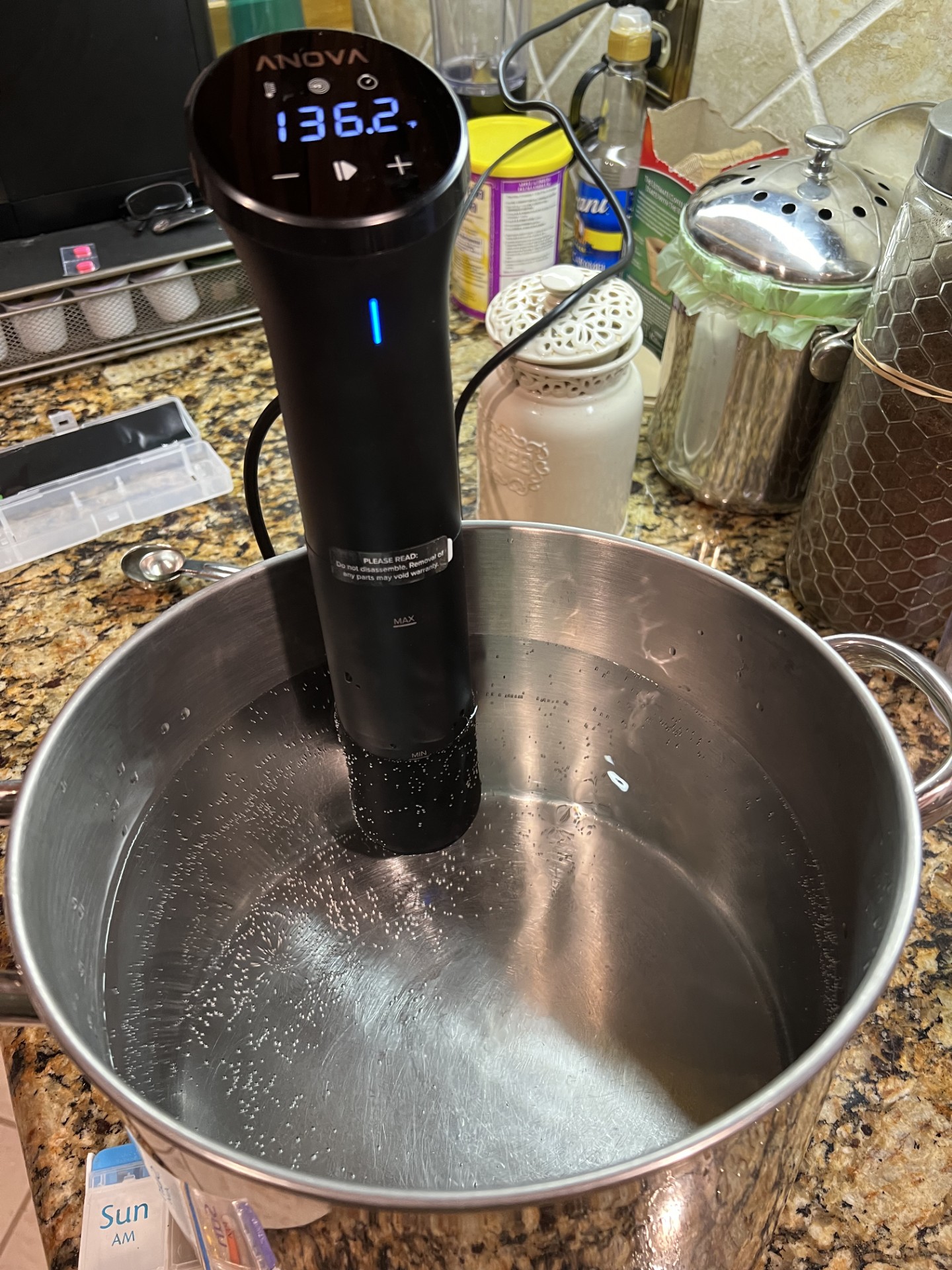
Additional experimentation and exploration, I am a bit notorious with my need to experiment and explore. The drawback is that repeatability when a come across something really good may suffer. Note to self; make notes and capture the story. Used my sous vide to run the water temperature up to170 degrees F. Steeped for 30 minutes. Needed to use 1.5 gallons to get sous vide gear submerged enough to pump and heat….I had planned on 8 grams of Tahoma, bumped to 12 grams as the volume was half again larger. My prior pH discoveries let me zero in to pH 3.55 this time, just what I wanted. I filled one half of a 1/8 teaspoon with citric acid but then ;only added a little “dab”, measured pH, added another “dab”, measured pH, added another “dab”, measured and yee haw, pH dialed in to 3.55. Still a relatively large amount of citric acid was left in the measuring spoon.
Off to the races……heading on up to 170 degrees FReached set temperature…..close enough for my purposes. Removed sous vide and added hops as shown below.Just at the beginning of immersing the hops.A little low on carbonation so I jacked up the pressure a little more . Color is nice and the flavor is smooth….I may try the next glass with a slice of lemon but it really doesn’t need it.
Chilled the one gallon batch overnight after running through cheese cloth to sieve out hop pellet crumbs. Then added the chilled batch to my chilled growler and charged up the pressure to approximately 20 psi. Shook it good in order to get the CO2 into solution. Will shake it again after 24 hours and then wait a day to sample the result. Be patient Bishop …….. The initial aroma is good and I do like the color, a bit more yellowish, very much more than the prior 3 batches. Not sure if it is all due to the hops variety or the warmer temperature used for steeping or a mystery due to my exploration……..
Added another cartridge to better carbonate this batch.
New hop variety, a true lemon and a tweak to the steeping process. So let me break it down, The hop variety first. I am a big fan of SMaSH IPA’s and have brewed 3 or 4 batches, my favorite are the batches made with Mosaic hops. The beer is heavily dry hopped and my freezer was holding several ounces of Mosaic hops, therefore batch II was made with Mosaic hops. Next, the lemon to add acidity to the steeping water. I had a list to grocery shop this morning so I added a “real” lemon…..and yes it was tart and acidic. When it came to steeping I chose to go with a dry hoping approach at room temperature for 24 hours, then chill and filter into the Growler for carbonation.
Patience…. I need to be patient, patient enough to wait out the process and if it all works out savor the hoppy essence. I was patient and I will need to tweak my recipe. A bit more hop flavor came through but…..the hops were old and poorly sealed up so I suspect they oxidized. I do have a stash of many pouches that are still sealed and will be smarter with batch number 3.
I picked the brain of the head brewer at my local Brewery, DECA, and I will follow his advice offerings. It will entail getting a good pH meter……I need one don’t I ??????? I will also order some citric acid to help zero in on the right pH…..somewhere around 3.5 and 4.0.
Paused mid blog draft and made batch II and it was miserable. Batch III is underway today and I am better prepared. I have my pH meter, citric acid and hops that are still sealed from the supplier……Batch II failure I am attributing to a pouch of left over hops from the SMaSH Mosaic IPA I made a long while back. The taste and aroma of the hops was woefully missing form that batch, although I did drink nearly 1/2 of the 1 gallon batch.
Already a few lessons learned, my “spring water” is about 7.15 pH……so, with the one gallon of spring water I added one teaspoon of citric acid…….It dropped the pH to 1.8……way overshooting the 3.0 to 3.5 I was aiming for……dilution was the solution but wow…….I would have never guessed…..I finally got it up to 3.18 pH and will call that good. I dry hopped at room temperature for 4 hours and 45 minutes. Hop aroma was prominent. I ran the liquid through cheese cloth and then chilling it. The “Growler Werks” mini keg is also chilled. The chilled temperatures aids in force carbonating the batch. Colder liquids absorb the carbonation more quickly.
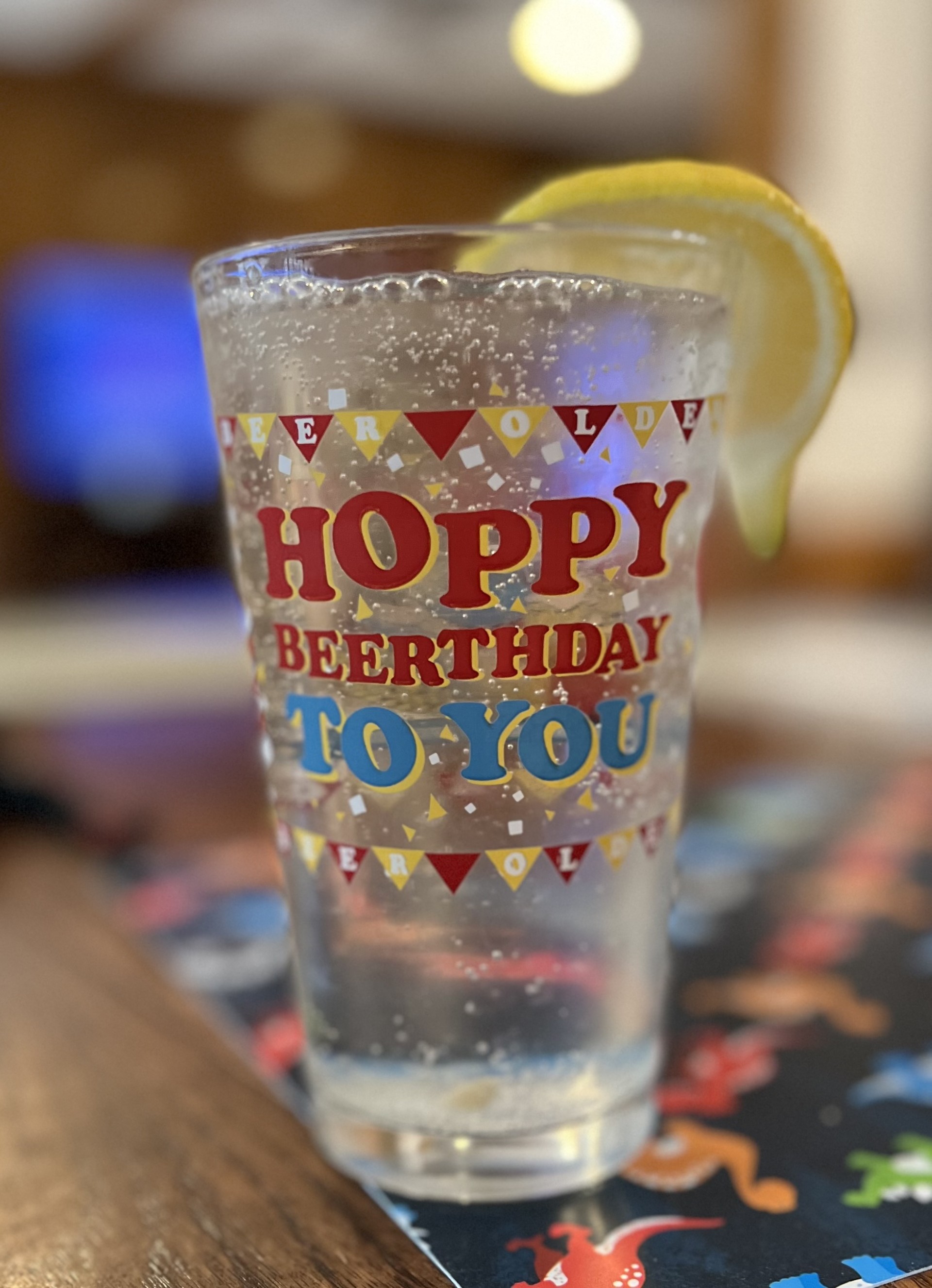
So…….finally tasting and testing. Second glass today, March 13, one day after my 73rd Birthday and it was a pleasant gift. I did not use lemon juice, just the citric acid and 6 grams of Centennial Cryo hops. Glass one was good , the hop aroma and taste was just enough but…….I added a little lemon wedge and it went to damn good…..
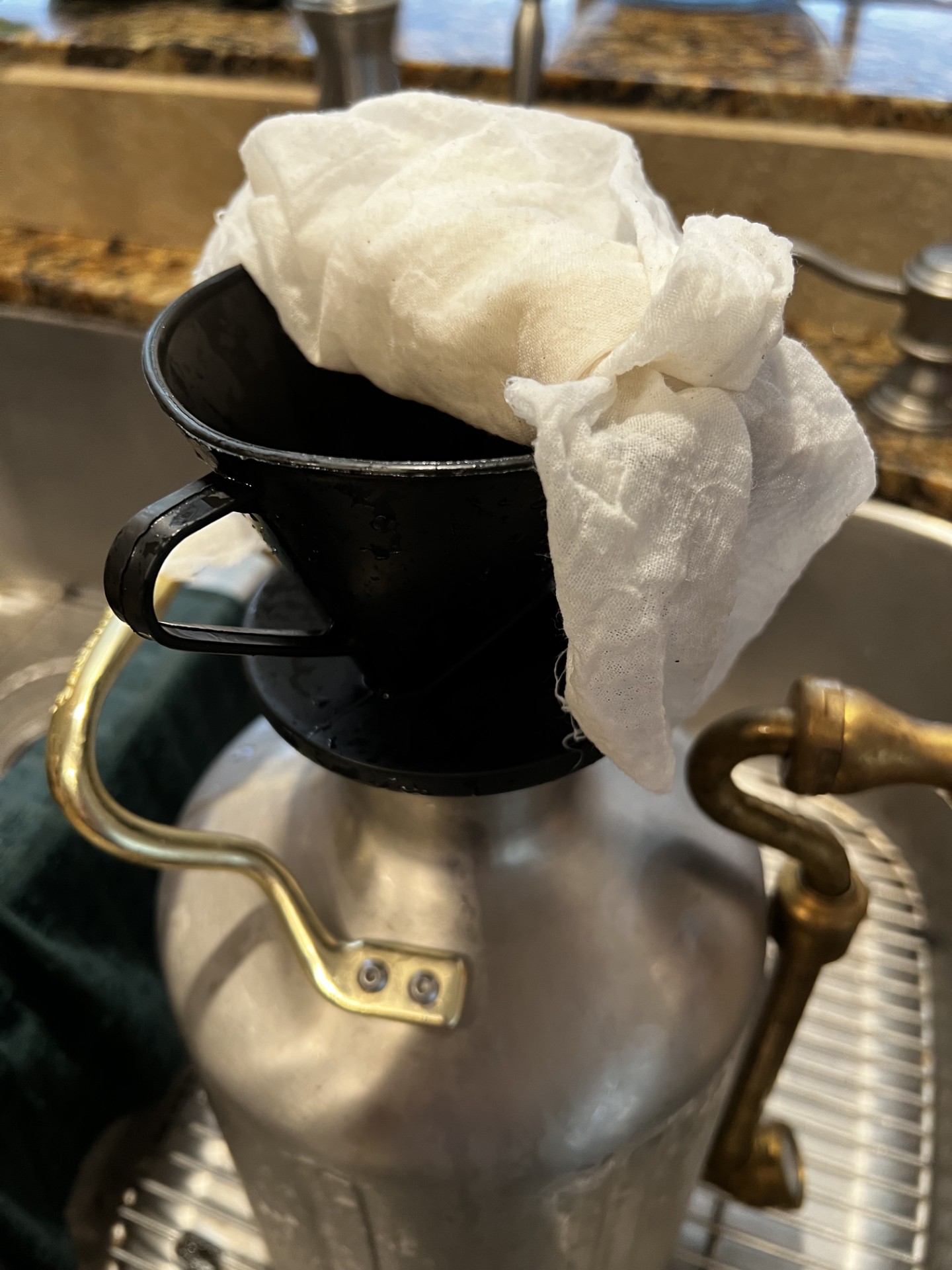
Freshly opened pouch, sadly I discarded to remaining pellets but lesson learned on previous batch…..it is best to use unopened hop pellet pouches. Well carbonated, Hoppy Beerthday to Me, Hoppy Beerthday to Me……go ahead and sing it out loud. Yum and yes it is very refreshing and I am very pleased. Just a hint of color as most of the hop sediment was filtered out. Started with a Melita filter funnel but not with coffee filters….another lesson learned even with cheese cloth it filters too slowly. I used tight mesh cheese cloth and then switched to the open bottom funnel I have used to fill jam and jelly jars. even though the hop pellets were in a mesh bag some sediment settled out overnight as I chilled this batch.
Can’t wait for warmer weather…..cool weather is lingering I am not complaining but……this Hop water will be a great hot weather thirst quencher. Batch 4 …..hmmmmmm what will I tweak next….any suggestions?
I have been aware of the growing trend of breweries adding hop water to taproom offerings as well as some well known breweries offering hop water, i.e., Lagunitas, Sierra Nevada, as well as my local go to brewery, DECA in Porter, TX. DECA doesn’t always have it on tap but I have sampled the Lagunitas as well as the Sierra Nevada offerings and……….I Like! So now the question is, can a home brewer make something drinkable? Below is my first attempt……..two reviews near the end of the blog post.
Doing a search for recipes I found mostly recommendations for 5 gallon batches. That could have been an option for me but, alas, my kegerator died suffering a compressor failure and an $ 800 repair estimate on a used refrigerator. I do have the desire to rebuild but with a brand new refrigerator costing less than the repair estimate……and potentially a long life. The kegerator comes into play as the hop water recipes all require carbonation. Alternative are the counter type Soda Stream devices or, lucky me, I have a 1 gallon Growler Werks growler that has a potential for me to carbonate my first attempt. Another plus of 1 gallon batches is that I don’t have to drink a 5 gallon batch or wait for my buddies to help.
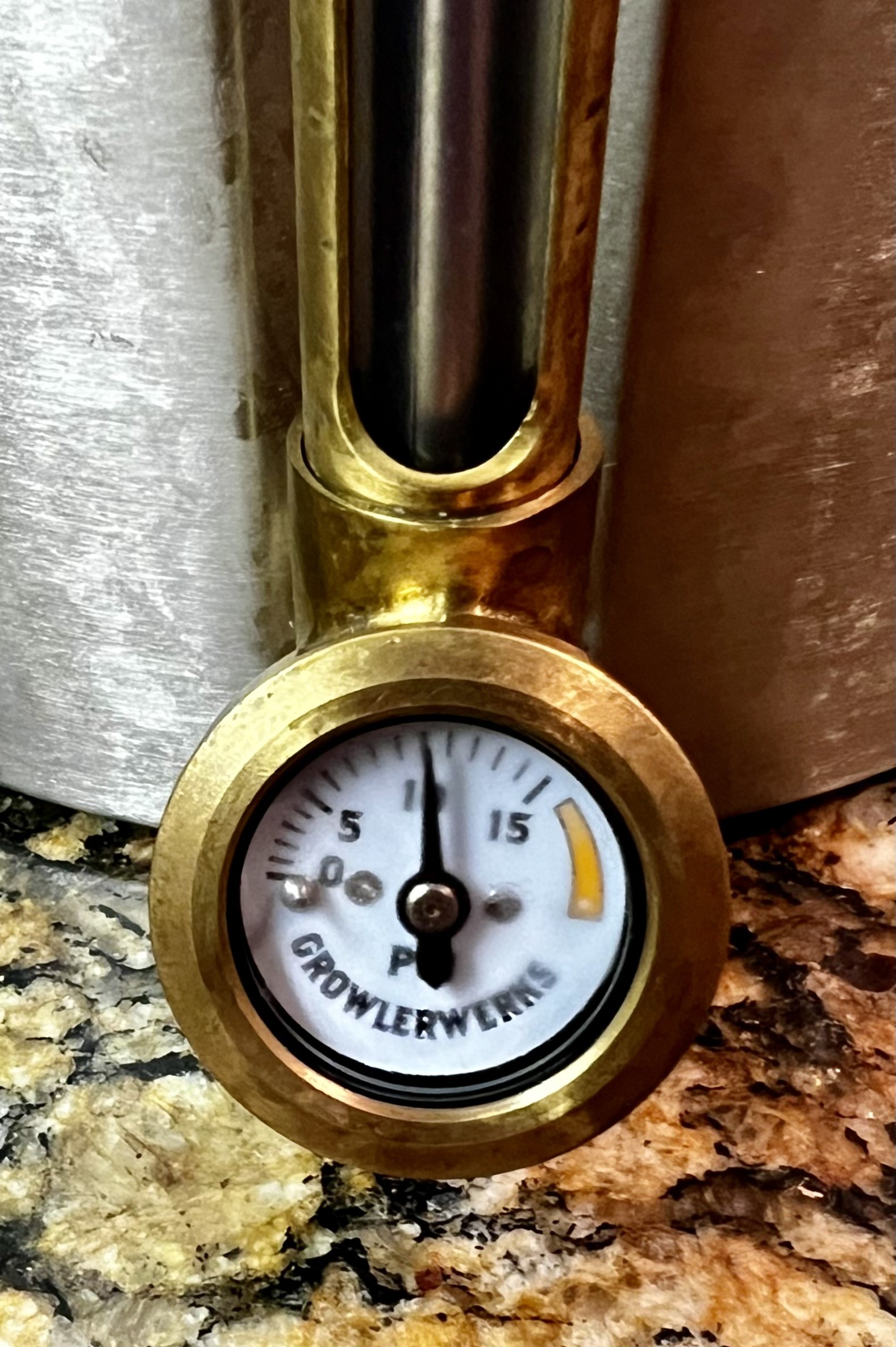
I was one of the early adopters for the Growler Werks crowd funding and among the very first recipients of the 128 ounce growler. It has been lightly used but if my hop water adventure is fruitful is a better future for it. One good thing about the Growler Werks is the pressure gauge. A little explanation is needed here. Most recipes call for force carbonating at 30 psi. My growler’s scale goes to 15 psi and anything beyond that is a guess.
A walk through my process and first attempt. Duh, I decided on a 1 gallon batch. Best guess from my reading online was 5 grams of hops, juice of one lemon and a dash of gypsum. I chose to heat the water to near boiling and as it cooled to 170 deg F, I steeped the hops for 20 minutes in a hop bag I use when dry hopping my brews. Once cool, I squeezed in the juice of one lemon, a Meyer Lemon……more on the later, a dash of gypsum and removed the hops bag taking care to not squeeze it. I placed the pot in the fridge for 24 hours then transferred the liquid through Malitta coffee filters. I had on hand a fairly large selection of hops acquired from a store going out of business stored in my freezer. I chose Amarillo for my hops….Hmmm more later.
From yakimavalleyhops.com the Amarillo is described as; ”Amarillo® offers solid bittering properties in the 9-11% Alpha Acid range and it packs one of the highest myrcene oil contents (60-70% of total oils) of any hop. This gives it a very sweet citrus flavor and aroma that is closer to oranges than grapefruit.“ See above…..I used the juice of a Meyer Lemon, which may not have been to best choice. The Meyer lemon fruit is very yellow and larger, rounder and juicier than a true lemon They are much sweeter and less acidic than the more common supermarket varieties. Most recipes called for getting the pH into the 3.5 range and the Meyer Lemon’s acid content may have come up short there. . The skin is fragrant and thin when ripe and makes an excellent jelly…..Yum.
So, with the sweetness and less acidic properties of the Meyer Lemons and the flavor profile of the Amarillo hops……the hops flavor may have been masked. After the growler was filled with the cold hop water, I added a CO2 cartridge, cranked the pressure up well past the 15 psi mark, shook the growler to help force carbonate and let it sit in the fridge for 24 hours. After 24 hours I pulled a sample and shared it with my good friend…..taste was very citrusy but no detectable hops, in either aroma or taste. That said, we both agreed that it was refreshing and is a good zero calorie beverage for a summer day……even if it is February in Houston…..at 75 deg F and humid. About 24 hours later I sampled it again and I could finally detect the hint of hops. The hop water is very slightly cloudy and by day 3 it had more evidence of sufficient carbonation.
Day 4, very pleasant and after nearly 4 pints of the available volume the CO2 pressure had begun to drop. The flavor is still improving and begs for another round of experimentation. What will I do differently? Use store bought lemons for sure! Monitor the pH, this will require a meter and steep longer to pull more of the hop’s attributes.. Maybe two experiments with steeping; 1. dry hop for 24 hours at cold temperature, or 2. begin steeping at 170 deg F and then allow to steep for 24 hours. Hop selection may change to something like Citra, Mosaic or Centennial. I have lots of hops so there may be multiple iterations and taking good notes, not one of my strong points, will be a must.
Very cold and refreshing and with some carbonation. Hint of color and tasty.Adding a little more of the story to an earlier photo. After 4 pints the pressure has dropped but the hop water still seems to retain the carbonation.
I think I am going to like my experimentation and what a great way to reduce my weekly calorie intake, read that as maybe………. fewer beers…….not really a bad thing as creep closer to my 73rd birthday in Early March.






 Bishop's Beer Blog