A Tragedy, Not of a Greek Tragedy Nor Shakespearian Nature, but a Tragedy Nonetheless.

When I considered writing about my recent and very significant tragedy, the first thought that popped into my head were the words, “Greek Tragedy and Shakespearian Tragedies”. Well, very quickly I realized my lack of writing skills! The first of which is “1 – Language: Shakespeare (or whoever really wrote the plays) wrote in iambic pentameter within a sixteenth century style of English. The Greek tragedies, of course, were in neither English nor iambic pentameter but in common Greek.”(1) I do remember hearing about iambic pentameter and failed miserably in my English classes trying my hand at it! As for common Greek, well, it is all Greek to me.

Secondly, ” 2 – Subject: Most of Shakespeare’s subjects were real people. He got many of his characters from “Holingshed’s Chronicle” and other historical volumes. Some Greek tragedies dealt with real people but had a tendency to veer to gods and goddesses and those with almost superhuman determination or strength.“(1) I am most definitely real people, but I will not even pretend to be a god or have superhuman traits.

Thirdly, ” 3 – Endings: Shakespeare’s endings were more more realistic. The Greek’s loved “deus ex machina” (god from a machine) for their happy endings. As our hero or heroine got deeper and deeper into plot problems, a hand-lowered contraption with a actor as “god” inside would magically make everything great again.”(1) The ending to my tragedy has not yet manifested itself, but, I do have a pretty good idea where/what it might be and address minimizing future tragedies.

 (1) https://www.quora.com/What-are-some-similarities-and-differences-between-Greek-tragedy-and-Shakespearean-Tragedy#:~:text=Greek%20tragedy%20is%20typically%20written,asides%20spoken%20by%20individual%20characters. I am sure my attempt at proper attribution for the quoted sections above will keep me out of plagiarism court or from ridicule at Harvard.

This is both a personal tragedy and a tragedy to an important inanimate object, yet, an important object in my life and nearly essential to my well being. My kegerator died an early but under the circumstances, not an unforeseen death. Building my kegerator was a labor of love as well as an exercise in creativity. The base element was a “used refrigerator with a top door freezer section. The used element…..the good and the bad, cost was attractive but the condition of the refrigerator was a big unknown and a key element in the tragedy.
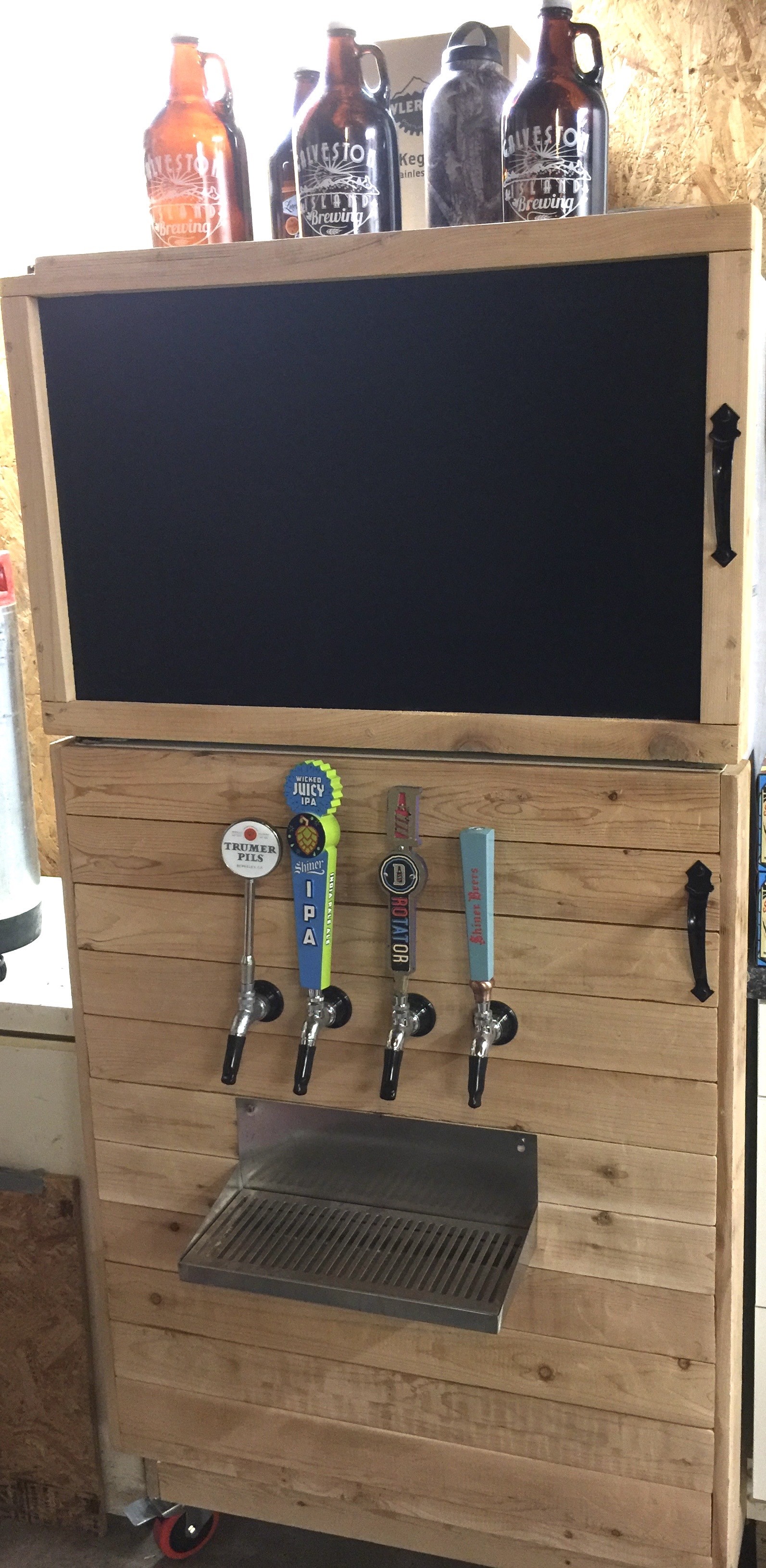
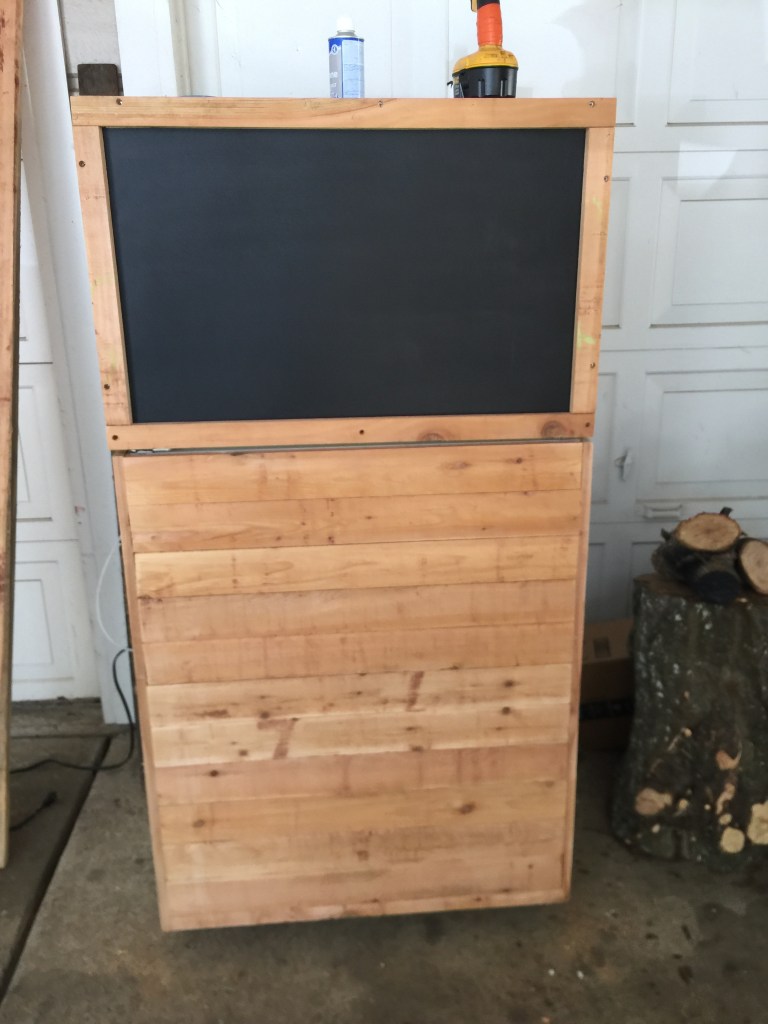
The finished product. Four taps available and aesthetically pleasing with it’s covering in rough cut 1X4 cedar boards. I left without finish for a rustic appearance. The top freezer section was finished with chalkboard paint. Handy for designation of which particular essence/nectar of the gods is on tap.
Four Cornelius 5 gallon kegs fit very nicely into the comfy, cozy and chilly home. When equipping my kegerator I also purchased an Sanke valve set up so I could also tap commercial style kegs.
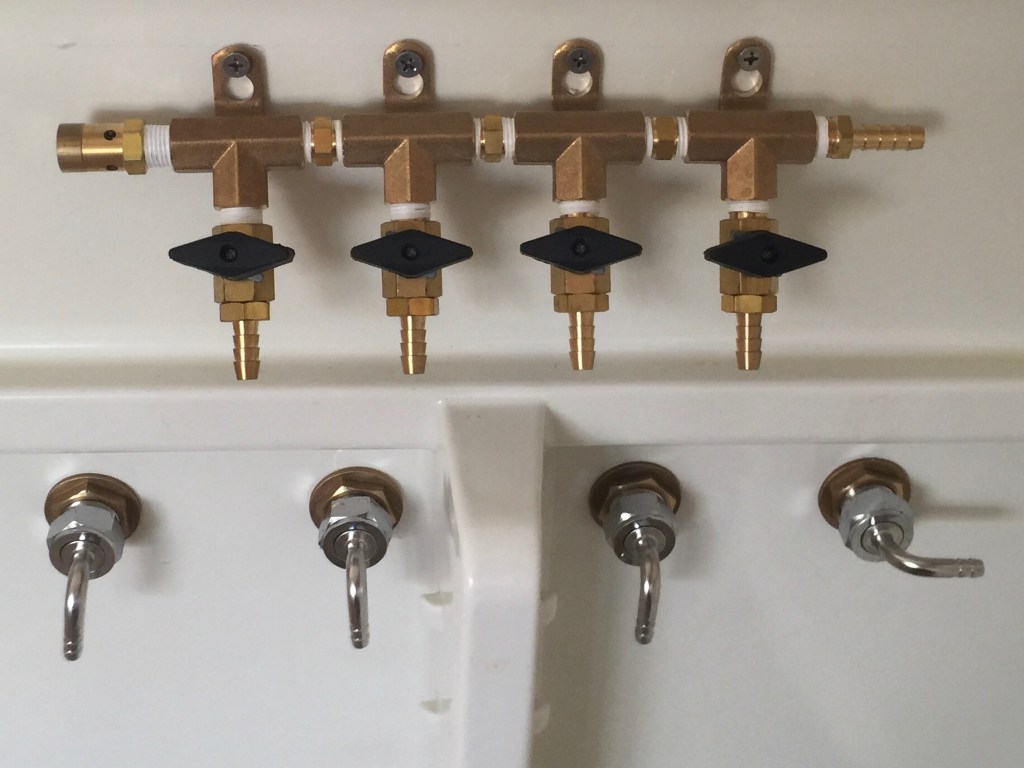
Sanke valve vs. ball lock type connectors on Cornelius kegs.

Now the tragedy to my beauty, my refuge and to my love of sharing the essence or nectar of the gods with friends & family was ripped from my heart in a tragic and untimely demise. The heart of every refrigerated device is the compressor. We/I had a massive heart failure and, although repairable, less expensive than a medical repair, it is still costly……. the estimate was a potentially costly $ 797.66 and it could be almost as good as new……! Now, my dilemma, spend nearly $ 800 to put it into working order but still used!!!!! Or, at my leisure, my labor is essentially free, strip the cedar off the original project and install on a brand new refrigerator costing less than $ 700 new, replumb the lines, FYI there were some lessons learned there that will be incorporated into the new project, hopefully creating a very long lasting kegerator! …….Hmmmmmmm what is a beer drinker to do????? Better have a beer to facilitate this difficult choice.

Drink Local and Drink Responsibly

Bishop

No, I Haven’t Stopped Brewing

I have a couple of new brews to share and a kegerator build to share.

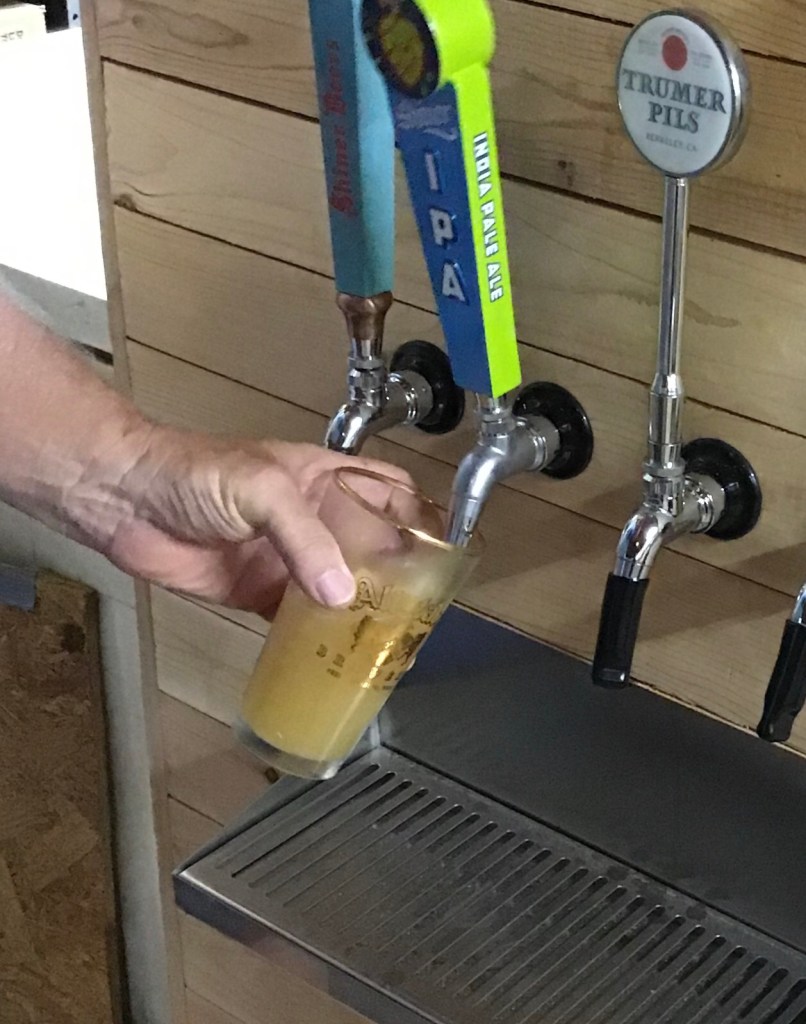
No, it is not a Shiner Juicy IPA. It is my first one that I have ever brewed, my first to grace my new kegerator and…. it is pretty damned good.

Since the Wit Bier i wrote about last, I have brewed and bottled a Honey Blonde Ale using honey from one of my apiary locations. Next up was a deviation from anything I have brewed in the past, it was a New England style hazy and juicy IPA. I didn’t bottle it but it is the first beer into my new kegerator…..see photo above.

The Wit Bier was a success but, ……… the choice of Citrus zest was not as good as the prior batch, at least according to my wife. Others tasting the current batch give it high marks but don’t have the reference point of the prior batch.

What made the prior batch special? The zest for the Wit Bier makes a bigger impact than I would have expected. I used a store bought grapefruit as well as a store bought Blood Orange. The lemon was a homegrown Meyer Lemon, sweet and very aromatic. At my wife’s request no coriander is ever used in my Wit Biers due to her dislike of it from my very first batch. The current batch was brewed with all store bought citrus. The brew store Guru, Preston Brown, down at “The Grain Cellar” in Humble, TX, has suggested using all blood orange in the future. Interestingly, if it is not in the stores it can be brewed with blood orange purée. I may have to research this approach.

Let me turn my attention to the kegerator. I toyed with the idea of using a chest freezer but finally settled on in upright refrigerator with the freezer on top. I brainstormed a little with myself, small storm and no sparks, and decided that top freezer portion could be used as a chalkboard as well as a magnet surface. I used chalk paint and framed it as if it were a real chalkboard. The space will be used to note which beer is on each of the 4 taps.

Chalkboard painted surface surrounded by 1X4 cedar boards. Should be more than adequate space.

The interior of the bottom portion will easily hold 4 Cornelius kegs as well as one or two commercial style 5 or 7.5 gallon kegs along with the Cornelius kegs. One concern is tap handle clearance for opening the freezer where frosty mugs will be located. I measured concern and maybe twice…… I decided to run a horizontal center line on the third 1X4 below the freezer.

The lucky mistake…..I sat down, drew the lines and drill hole locations and drilled the fourth board down, not the third. Crap! If I had drilled the third board down I would have intersected a molded obstruction not allowing me to properly secure the taps!
That molded strip would have caused an epic fail! It was a very lucky accident.
Four Cornelius kegs easily fir with plenty of clearance. Now…. to brew and keg!

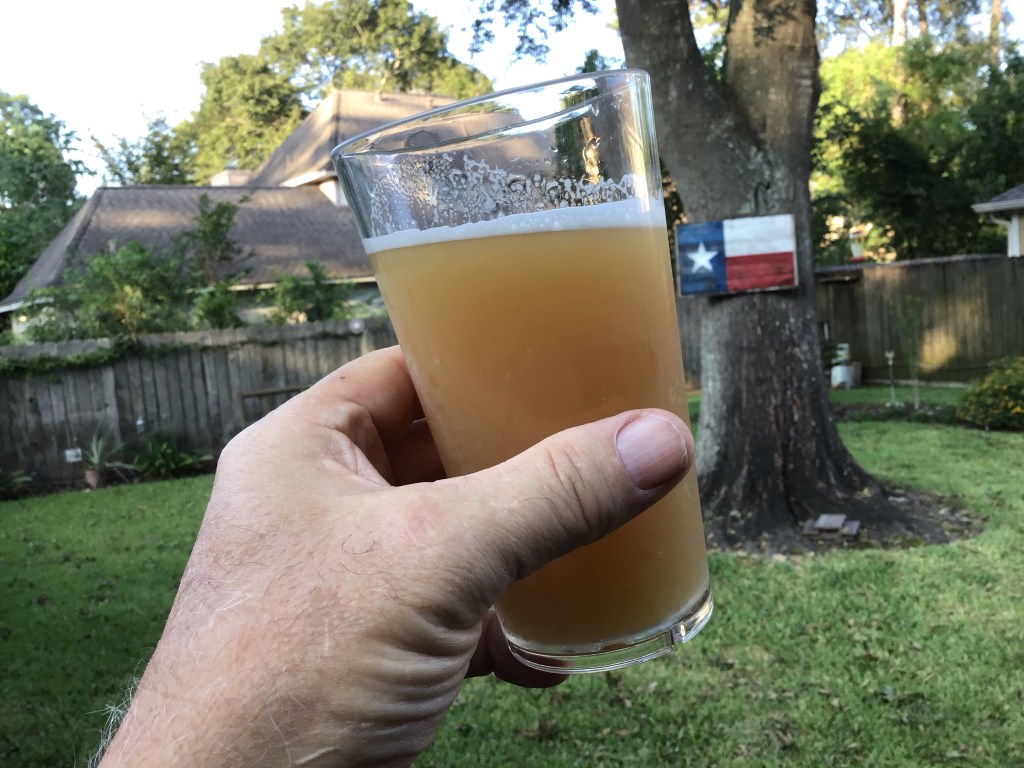
First up was the aforementioned New England Style IPA. Lots of hops, very little up front for bittering, a good dose at flame out, another good dose steeped after the boil and three rounds of dry hopping. I have learned the this dry hopping schedule give the beer it’s haze and the citrusy hops provide the “juicy” part of the flavor profile.

Scientifically speaking, “haze is a combination of polyphenol and protein molecules that associate via hydrogen bonding and become visible,” explains John Palmer, author of How to Brew. Suspended yeast, which is different than protein-polyphenol haze, also causes cloudiness. There are some banter back and forth on this style, but to me it comes down to you and your preferences. Me, I can drink almost any and every style…….except for Sours……not for me!

First pour off the kegerator, the Hazy Juicy IPA……..not the Shiner version…..I just happened to score the tap handle, actually a box of various ones, from my Denver based daughter. (Repeat of top photo)
A toast to Texas and a hazy IPA.

In the fermenter now is a West Coast style IPA. “West Coast IPAWest Coast IPAs are known for the huge hop aroma bursting with notes of citrus and tropical fruits. Their malt character is understated, and they finish dry to let the layered hop flavors and aromas take center stage.” By JOHN VERIVE, Los Angeles Times, February 22, 2014.

This brew will be heavily dry hopped and should mirror the description from the Times article. Chinook for bittering, then good doses of Citra, Simcoe and Amarillo hops for very late addition, steeping and dry hopping. Should be kegging it in about 12 days!

Drink Local and Drink Responisbly

Bishop