A Tragedy, Not of a Greek Tragedy Nor Shakespearian Nature, but a Tragedy Nonetheless.

When I considered writing about my recent and very significant tragedy, the first thought that popped into my head were the words, “Greek Tragedy and Shakespearian Tragedies”. Well, very quickly I realized my lack of writing skills! The first of which is “1 – Language: Shakespeare (or whoever really wrote the plays) wrote in iambic pentameter within a sixteenth century style of English. The Greek tragedies, of course, were in neither English nor iambic pentameter but in common Greek.”(1) I do remember hearing about iambic pentameter and failed miserably in my English classes trying my hand at it! As for common Greek, well, it is all Greek to me.

Secondly, ” 2 – Subject: Most of Shakespeare’s subjects were real people. He got many of his characters from “Holingshed’s Chronicle” and other historical volumes. Some Greek tragedies dealt with real people but had a tendency to veer to gods and goddesses and those with almost superhuman determination or strength.“(1) I am most definitely real people, but I will not even pretend to be a god or have superhuman traits.

Thirdly, ” 3 – Endings: Shakespeare’s endings were more more realistic. The Greek’s loved “deus ex machina” (god from a machine) for their happy endings. As our hero or heroine got deeper and deeper into plot problems, a hand-lowered contraption with a actor as “god” inside would magically make everything great again.”(1) The ending to my tragedy has not yet manifested itself, but, I do have a pretty good idea where/what it might be and address minimizing future tragedies.

 (1) https://www.quora.com/What-are-some-similarities-and-differences-between-Greek-tragedy-and-Shakespearean-Tragedy#:~:text=Greek%20tragedy%20is%20typically%20written,asides%20spoken%20by%20individual%20characters. I am sure my attempt at proper attribution for the quoted sections above will keep me out of plagiarism court or from ridicule at Harvard.

This is both a personal tragedy and a tragedy to an important inanimate object, yet, an important object in my life and nearly essential to my well being. My kegerator died an early but under the circumstances, not an unforeseen death. Building my kegerator was a labor of love as well as an exercise in creativity. The base element was a “used refrigerator with a top door freezer section. The used element…..the good and the bad, cost was attractive but the condition of the refrigerator was a big unknown and a key element in the tragedy.
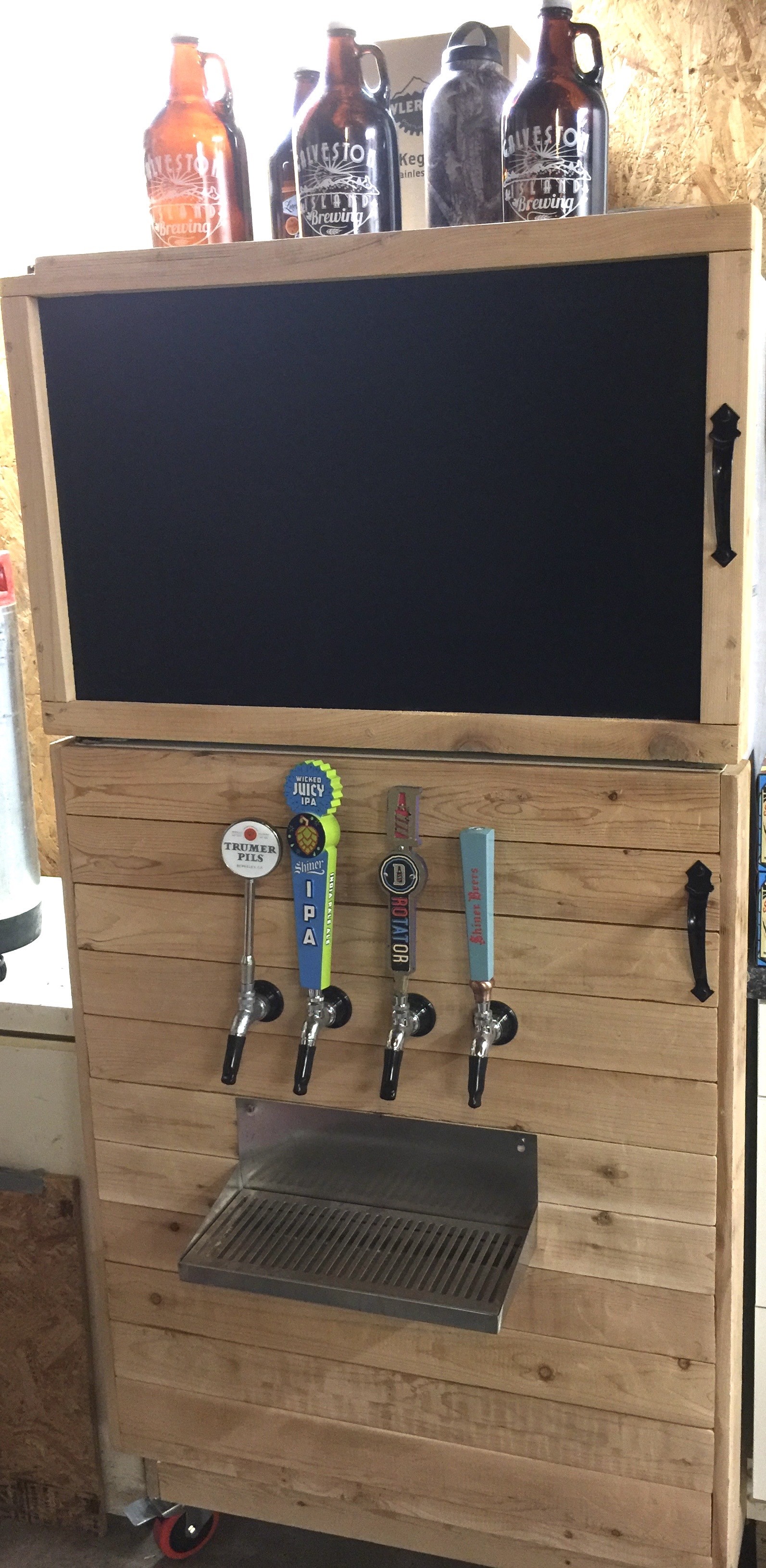
The finished product. Four taps available and aesthetically pleasing with it’s covering in rough cut 1X4 cedar boards. I left without finish for a rustic appearance. The top freezer section was finished with chalkboard paint. Handy for designation of which particular essence/nectar of the gods is on tap.
Four Cornelius 5 gallon kegs fit very nicely into the comfy, cozy and chilly home. When equipping my kegerator I also purchased an Sanke valve set up so I could also tap commercial style kegs.
Sanke valve vs. ball lock type connectors on Cornelius kegs.

Now the tragedy to my beauty, my refuge and to my love of sharing the essence or nectar of the gods with friends & family was ripped from my heart in a tragic and untimely demise. The heart of every refrigerated device is the compressor. We/I had a massive heart failure and, although repairable, less expensive than a medical repair, it is still costly……. the estimate was a potentially costly $ 797.66 and it could be almost as good as new……! Now, my dilemma, spend nearly $ 800 to put it into working order but still used!!!!! Or, at my leisure, my labor is essentially free, strip the cedar off the original project and install on a brand new refrigerator costing less than $ 700 new, replumb the lines, FYI there were some lessons learned there that will be incorporated into the new project, hopefully creating a very long lasting kegerator! …….Hmmmmmmm what is a beer drinker to do????? Better have a beer to facilitate this difficult choice.

Drink Local and Drink Responsibly

Bishop

Russian Imperial Stouts – A Beverage that Begs to be Shared

I have brewed 4 or 5 batches myself, which I typically have bottled in 24 ounce bombers. Big ABV beers and big volume which I always utilize as “the one and done” beer at the end of the evening to be shared with 2, 3, 4 or more friends. Drink Responsibly…….The “one and done” is due to the ABV which tends to be north of 10 %. I don’t want to put a friend over their limit in any way shape or form. I am fond of the barrel aged Russian Imperial stouts and have always known they were to be shared and savored from my very first exposure.

I want to share my first exposure to the delights of Russian Imperial Stout…..the barrel aged beer called Parabola by Firestone Walker in Paso Robles, CA. Which year it was is a bit foggy…..not from the beer but from time frame……suffice to say a number of years ago. Close to 15 years are likely and I have slept multiple times since that visit to Firestone Pub in Paso Robles. That said I do recall my company that evening and the fun we had sharing the beer. My workmate Murray and I had been working in the area and decided to try out the Firestone Pub. The beer was their barrel aged Parabola, an Imperial Stout bottled in 22 ounce bombers……now reduced to 12 ounce sized bottle…..smart move and now the line up in their barrel aged offerings is extensive and so damned good.

Our waitress made the suggestion at he end of our meal to give Parabola a try. Glad we listened but in our conversations we realized that even though she recommended the beer, she had not ever tasted it. Murray and I immediately knew we had to include her, but we also realized this beer was near 14% ABV and we didn’t need to cross the line. We eventually shared 5 reasonable pours of this bottle and needless to say we were both hooked. I bought a bottle to bring home and in the years since, I have made it a top choice for sharing.

I do not brew this beer often and I always utilize toasted oak that has been soaked in bourbon to enhance the final product. The final product many times needs to age up to a year before it mellows out and becomes literally = Nectar or Essence of The Gods…..ready to be shared. I am going to share a link to Firestones barrel aged collection, as it has grown extensively over the years.

Take time to take a look. https://www.firestonebeer.com/our-beers/

Some of the Best Russian Imperial Stouts according to Beer Advocate ……FYI Parabola is on the list several times due to the fact, that the aging process can be different every year yielding different taste profiles needing to be shared…..LOL https://www.beeradvocate.com/beer/top-styles/84/

Three very fine ones in my inventory waiting to be shared. These are 12 ounce bottles so fewer shares available or maybe the same number with smaller pours LOL.

The last several batches I brewed I have been wise enough to bottle 3-4 in 12 ounces bottles to periodically share on 3-4 month intervals, in order to see if my partners in crime like the progress of the aging. One of my unique methods with my Russian Imperial Stouts I prime with brown sugar to allow CO2 to be built up. Most home brewers that bottle utilize corn sugar in the priming process that adds little if any flavor to the beer. The brown sugar creates the aromas and flavors that are also unique to my Imperial Stouts. From my sharing efforts in the past I have received strong and positive feedback from folks I shared this Nectar/Essence of the Gods with. It also ages well with a 6 year old bottle, last one from a prior batch getting rave reviews.

Drink Local and Drink Responsibly

Bishop

.

My First Lager……!Que Bueno!

Ok, yes, I am patting myself on the back……Translation……awesome! excellent beer Bishop, keep up the great work! The most difficult portion of this effort was the need for patience, allowing the beer to lager for 6 long and lonely weeks,……….just begging to be quaffed. Brew date was June 23, 2023, raised temperature to 68 degrees F on my mother’s birthday, June 30th, she would have been 94, for the diacetyl rest, what is that?…….”Because of the need for warmer temperatures to reabsorb the diacetyl, the diacetyl rest stage is mostly used when brewing lagers.” It was then cold crashed for several days to aid in clearing up the beer. It was kegged on July 8, 2023 and placed at 36 degrees into the kegerator and placed on CO2 for the +/- for 6 looooooong weeks needed to lager. On an additional note, in preparation for this beer I combined the zest of 4-5 limes into some 100 Proof vodka…….4 ounces of cheap vodka for about 3 weeks. The infused vodka was added when I kegged the beer.

Target date to drink was August 20, 2023, well it was going to be questionable if I could wait! The betting line was at least 100:1 against me…….and yes, I failed…..but it was for good reasons. I needed to pull a few samples about 4 weeks into the process to ensure any sediment that may have accumulated was pulled off and properly disposed of as well as checking the carbonation levels. Very little sediment was found and the disposal actually tasted pretty good, carbonation a bit light but not bad. At 5 weeks the sample was again pulled and properly disposed of. Much cleaner now and carbonation was on target. August 20th was approaching, Yee Haw.

I had my good buddy John over the join me for the summertime release of my Mexican Lager. The infused vodka was in just right amount, there is a hint of lime flavor but no indication of the presence of the little dab of spirits. If you folks have not been aware, August in Texas can be brutally hot. Summer of 2023 has literally kicked our butts around the block for 30 some odd days straight. My buddy John is a bit of a weather geek and for his Christmas/Birthday present several years ago, I bought him a weather station from Davis Instruments……The image below is from August 20th, the release date, and copied from his weather station. Needless to say we needed 2 1/2 to 3 healthy samples to adequately hydrate and give the beer a proper taste test. We both gave the beer high marks, Well surprise, surprise, surprise……Thank you Gomer Pyle USMC!

A little warm ya think and sadly not much breeze.
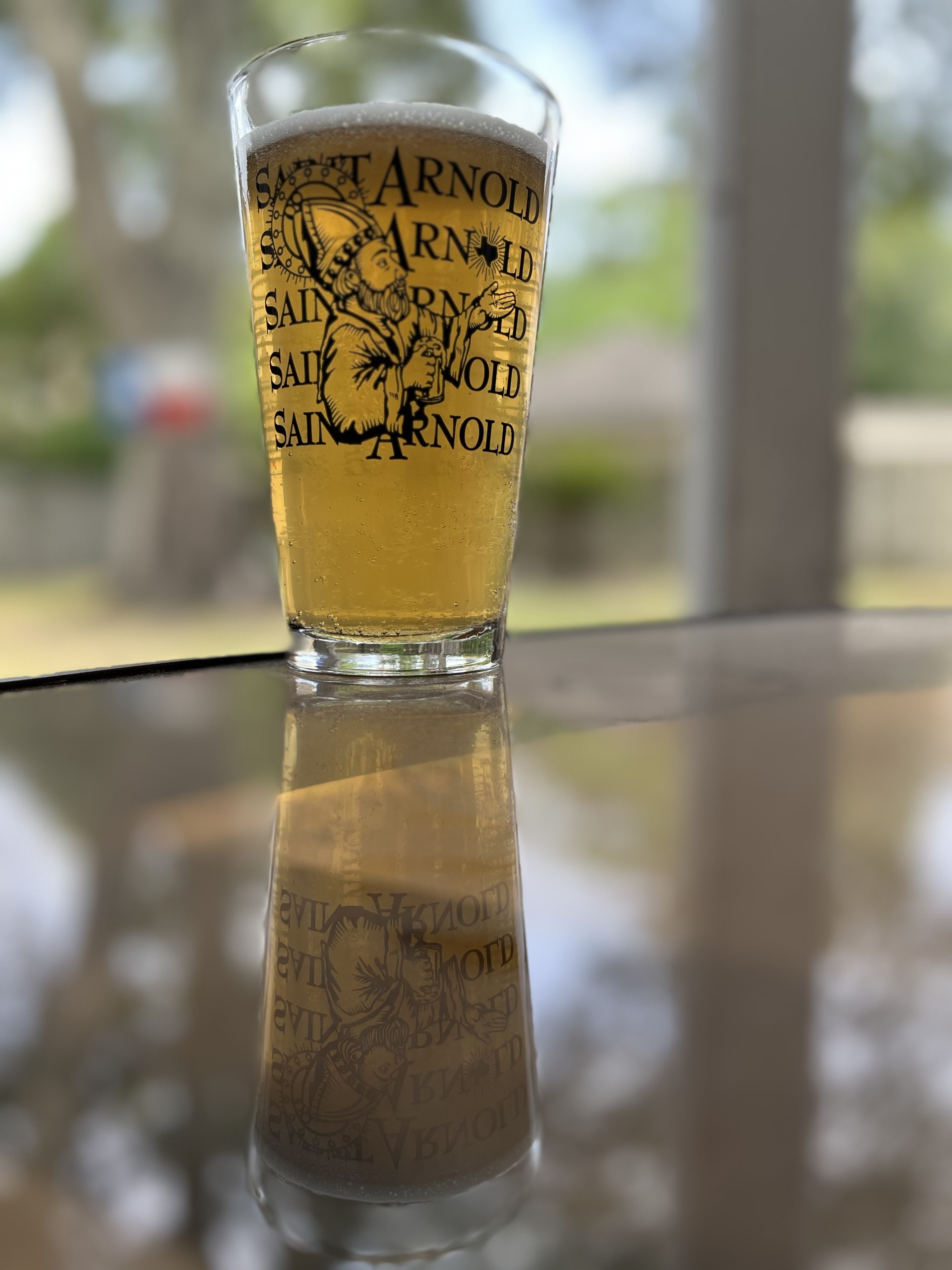
A Saint Arnold’s pint glass photo taken from my patio on August 22, 2023 and yes…….it was still friggin hot outside.

Will I brew another lager?…..Yes, but I prefer my ales…….I have 2 empty taps on my kegerator so I see at least one IPA – a SMaSH of some sort and probably a dank West Coast IPA in my near future. On a side note, a friend of my daughter’s was by recently and I broke out a 12 ounce sample of my bottled Russian Imperial Stout. He is a self professed fan of stouts. He and I split it. His opinion and mine were that the aging process is progressing nicely and it is very drinkable now…..I do have a number of 22 ounce bombers to share this fall and winter. It will only get better. Yum

Drink Local and Drink Responsibly

Bishop
Barrel Aging Beers and Priming the Bottles

I have made 4 or 5 Russian Imperial Stouts since I first began brewing in 1991. I have always used charred dark oak spirals that had been soaked in bourbon and added to the secondary fermenter for up to 3 months. Every batch has produced very drinkable and enjoyable stouts. The last batch was one that I ignored for several years, the last 22 ounce bombers were 6 years old when consumed at the beginning of 2023. the beer seemed to continue maturing to the “not bitter end”! The complexity of flavors never ceases to amaze me. The last bottle was shared with a handful of folks at DECA Beer Company, the head brewer Cody was loving the slight molasses aroma, obviously from the use of brown sugar to prime the beers.

Beer lesson……priming homebrewed beers that that are bottles. I batch prime my beers when I bottle rather than add sugar to each bottle….a lot less messy. If it is not and Imperial Stout, I use corn sugar to prime. How much sugar? Well that depends on the style and and amount of carbonation desired. There charts galore out on the web to help new brewers figure out how much sugar, and yes, you can use many different fermentable sugars. How do I batch prime. I will take two cups of water….microwave it until it is plenty hot, add in the measured amount of sugar and stir to dissolve. I then cover sugar water and let it cool before pouring it into the bottling bucket. As the beer siphons out of my fermenter into the bottling bucket it mixes uniformly and well….the residual yeast in the beer eats up the sugar, adding negligible alcohol but primarily creates the CO2 required for the beer.

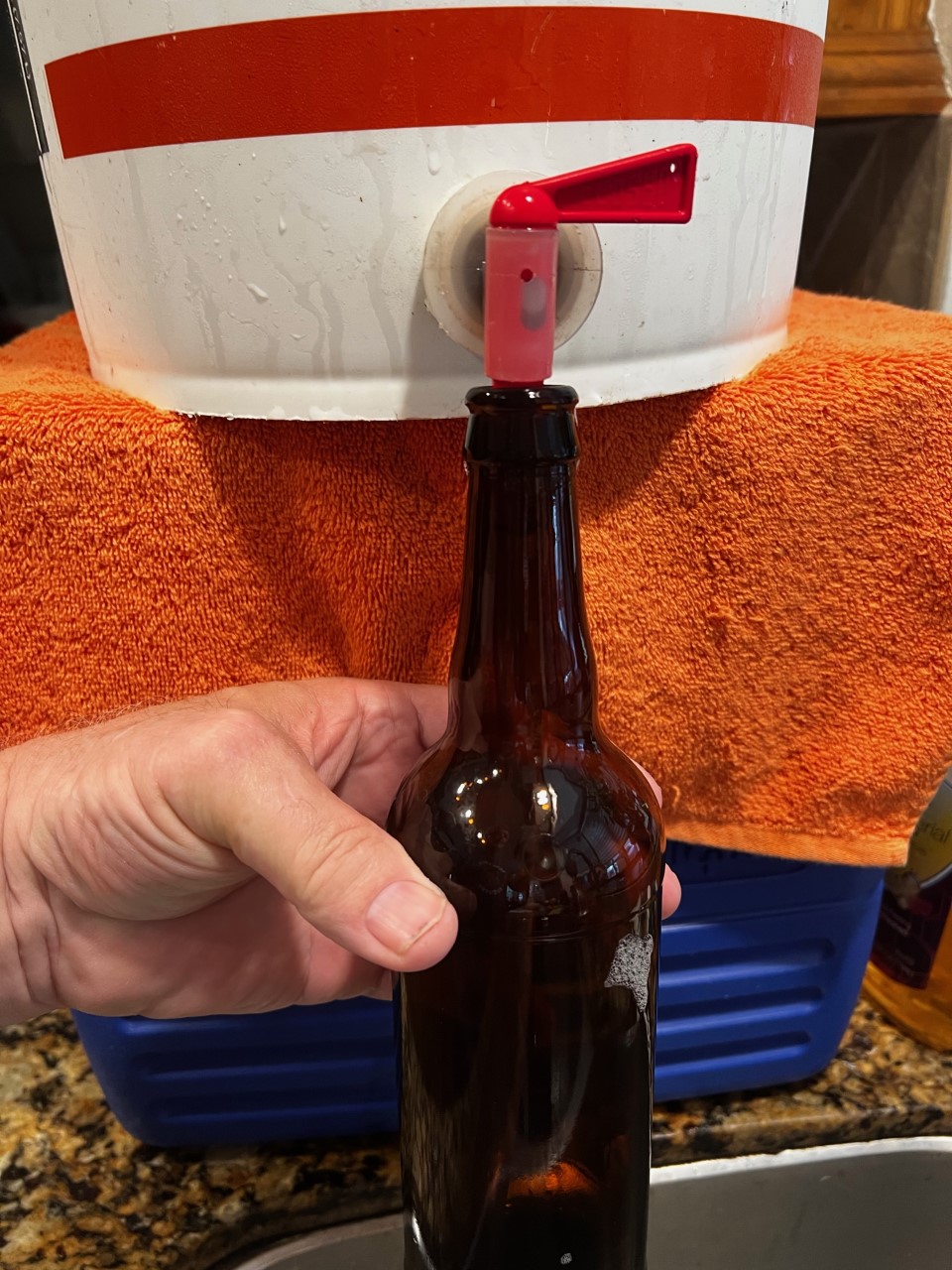
Filling a bottle from the primed beer in the bottling bucket. I use a sanitized plastic piece of tubing so the beer goes straight down to the bottom so as not to splash and add oxygen.

Many beers once primed and bottled can be ready to drink 14-21 days later. My Imperial Stouts take a lot more time, not necessarily to ferment, but to properly age and mature. Months and months down the road and continues to mature actually for years.

I would love to pick up a 5 gallon bourbon barrel for my home use. They can be found…..pricey maybe, but I think I will bite the bullet and attempt to really, really, barrel age my next batch. I would like to think that the depth and complexity of the beers will be amazing to say the least. I found this great guide that will help me out in that endeavor as well as give y’all a look at how it is done….lots of good info in the article and resources too. Enjoy……

http://secretlevelbrewing.com/barrel-aging-homebrew-in-5-gallon-barrels.html#preparing

Drink Local and Drink Responsibly

Bishop
Simcoe SMaSH Results.

I have this beer on tap in my kegerator now and everyday that I walk into the garage it whispers to me……”Bishop, come closer and grab a frozen mug! Pour a pint and enjoy it!” It takes all of my willpower to resist…..not that I have a lot of willpower when it comes to very good beer……Yes, I am patting myself on the back. So, on or around February 8th or so….It really isn’t a memory problem, it is about me not adding the proper notes to my brew sheet!

The chalk blackboard on my kegerator – yes I know……I have two empty taps….Get going Bishop!!!!!

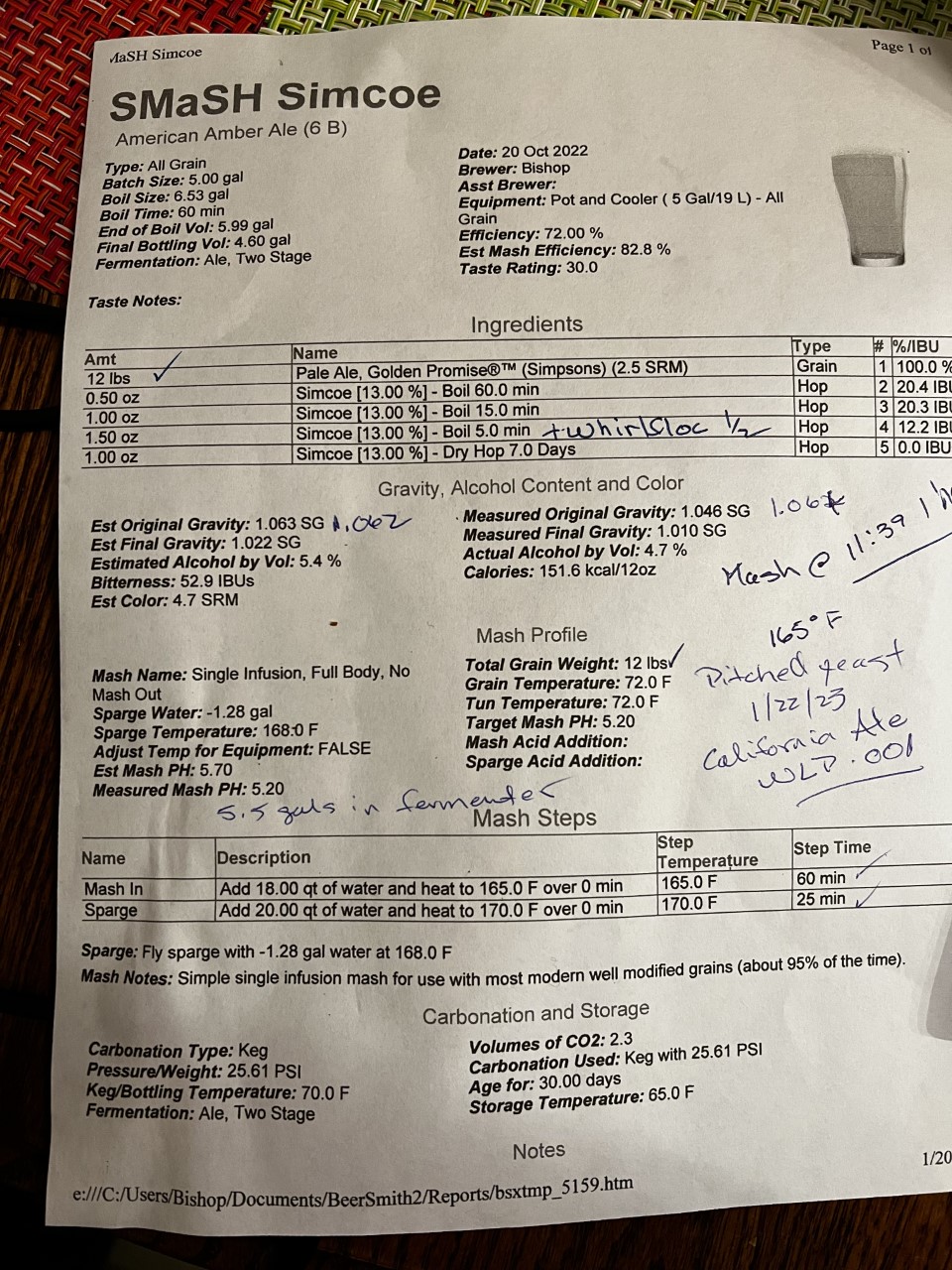
I did make a note that original specific gravity was 1.061, alas no date. Yeast was pitched on 1/22/23, WLP001 California Ale yeast. Pat myself on the back for that. I will now have to trust my memory on the next important part, final specific gravity, my memory has it at 1.012, which calculates out to about 6.4% ABV……several tastings of multiple pints seems to confirm the ABV….LOL. My previous blog post pegs the transfer to the secondary fermenter on January 29, 2023……So kegging was around February 7-8. First photo of a pint+ sized was February 11th……so…… relatively close on my time line….I will add those notes to the brew sheet and ask for your support and not calling me a liar.

Tasting, although my good buddy John does stoke (wasn’t sure if I wanted to use the word stroke here so I opted for stoke so as to not hear some of your giggles) my ego once in awhile, he pronounced this beer in the top 3 or so of my beers brewed…..he has liked a lot of my previous beers so I will accept his compliment. It was slightly over carbonated, but after relocating my CO2 bottle outside of the kegerator the low pressure gauge seems to respond better and hold the set pressures better. It now pours with a beautiful head!!!!!!

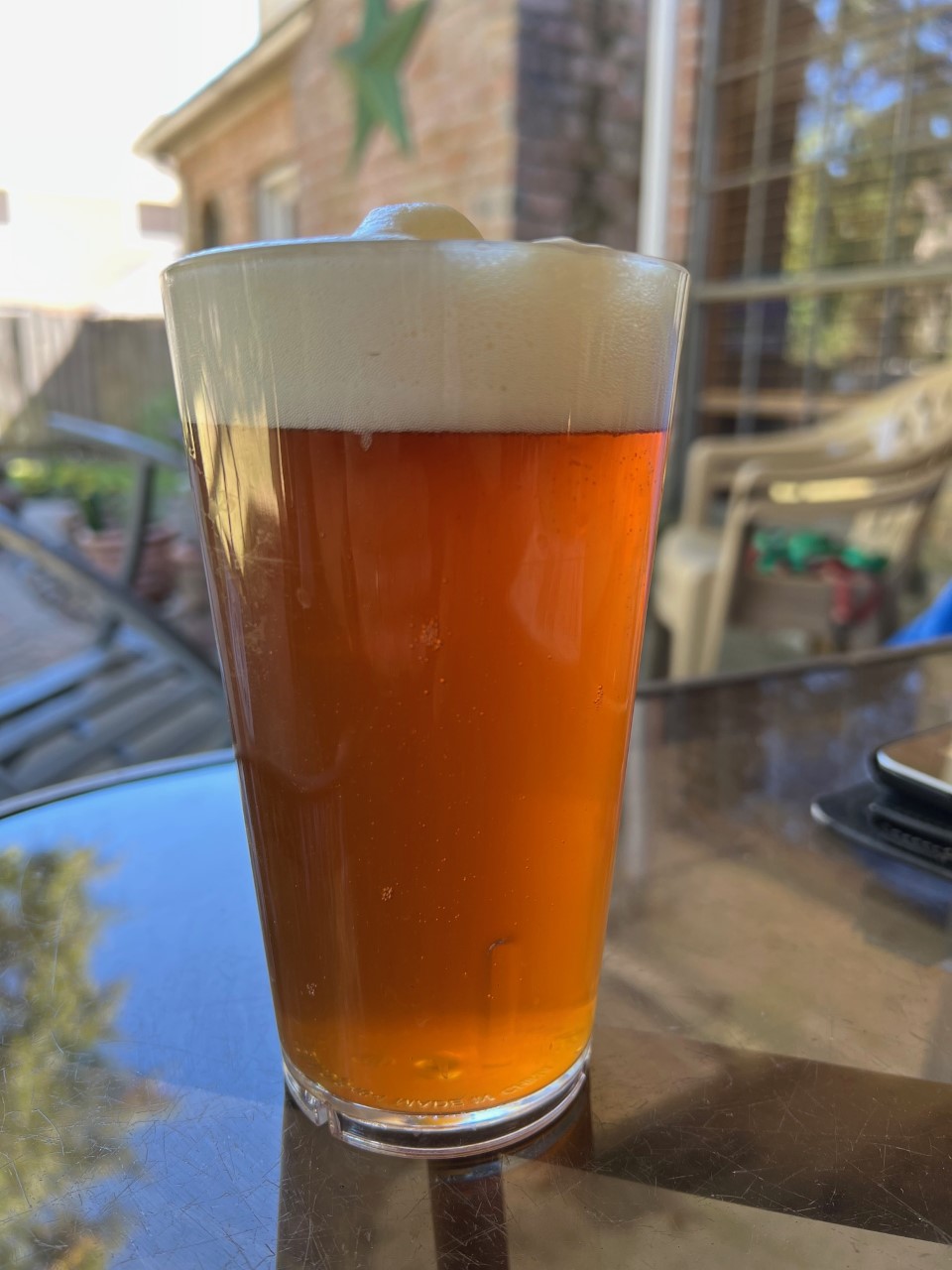
Nice thick frothy head……still very delicious and great aroma.
Simcoe SMaSH graciously accepting a couple of drops of green food coloring one day after St. Patrick’s Day

Now on to bigger and better things……a very big beer that nearly overwhelmed the capacity of my Grainfather System. I is rated at 20 pounds of grain and I managed 20.5 pounds……so, it was a struggle. It is a Russian Imperial Stout with dark toasted oak spirals soaked in good bourbon. The beer is in the secondary now, this will allow the spirals to sit for 8 weeks and impart magical flavors and mellowness to the beer and then bottle it in 22 ounce bombers. I am not kegging this beer. It looks like it will be between 10% and 11% ABV. The story on this beer soon!!!!!!!

Drink Local and Drink Responsibly

Bishop

Simcoe SMaSH IPA

Brewed this beer January 22nd 2023, after a fairly long break from brewing….The Avery Clone IPA was the last beer I brewed and kegged. If you read my last post you know that it disappeared too quickly. I have brewed a Mosaic SMaSH IPA several times in the past and decided to go with Simcoe hops for this SMaSH…..I love the aroma and the flavors come through very nicely….

My chicken scratch my brew sheet form BeerSmith on this recipe…..gotta keep notes if you want to to repeat a good beer.

A little about Simcoe Hops from Yakima Valley Hops web site;

“At 12%-14% Alpha Acid, Simcoe® has great bittering qualities, but also packs a complex aroma of stone fruit, pine, and citrus zest. It truly is a dual purpose hop that is capable of standing on its own in single-hopped beers in a wide range of styles.”

When I pulled the sample to determine the original gravity, 1.064 to be exact, I dipped my nose in for a whiff and by golly Yakima was right! Secondly the flavor was very, very pleasant a little sweet but to be expected as unfermented wort should be sweet. As the sugars in the wort are devoured by the “yeasties” the sweetness disappears and the magic of conversion to beer happens. I have very high hopes for this beer.

Brew day did not go as smooth as I would have liked…..I have a 110 Volt Grainfather G30 system. Overall I love it but……brew day was pretty damned cold for Houston and the wind was stiff. I brew outside because my wife does not like the smell of boiling wort in the house, I think it is rather pleasant but….I make some sacrifices to maintain harmony in the house. The mash went very smooth, the equipment held the 165 degree F mash temp perfectly. The system’s pump worked perfectly for the Vorlauf process. During Vorlauf and sparging I ran the set temperature up to 212 degrees F. One drawback of the 110 Volt system is the slower heating rates as compared to the 220 Volt systems.

I use my propane burner to heat the sparge water, 170 degrees F was the recommended tempearture. I was patient and sparged at a rate to rinse as much sugar out of the grain bed as was expected. As I was sparging the temperature was coming up very slowly…….too slowly. I pulled out my electric paint stripping gun and plugged it into a separate circuit in order to not to blow a fuse. It helped, I ran it on high setting on the lower sides of the pot….and slowly the pot came up to a good rolling boil. Added 0.5 ounces of Simcoe for 60 minutes. Next addition of Simcoe was 1.0 ounce at the 15 minute remaining mark and 1.5 ounces at the 5 minute remaining mark. Added ½ of a whirlfloc tablet at that same time in order to help precipitate haze-causing proteins and beta glucans resulting in a clearer wort.

Then a set back and change of process now that the beer had boiled for the required 60 minutes. I attached my counter flow chiller and attempted to pump hot wort through the coils and back into the pot to sanitize the coil. The pump had worked perfectly when I ran it to Vorlauf but for some reason the pump would not move any fluid…..I was at a standstill …… I disconnected the fittings to see if there was clog and I could not see a problem. Started and stopped the pump multiple times……no dice. I could hear it sounding like it was running but no output……I need to get the wort cooled and into my fermenting bucket.

Plan B now. The wort is at a specific gravity of 1.064 X 8.345 pounds of water per gallon X 6 gallons equals about 53.27 pound of liquid plus the weight of the pot. I had to now lift this hot and awkward mess up onto platform of some sort in order to make plan B work……siphon the wort into my fermenting bucket. I did utter some strong words, tested my 71 year old back and pain tolerance to hot surfaces, but did manage to gain the necessary height to allow the siphon to work. I pumped very hot wort through the siphon hose and equipment and back into the wort to sanitize it all……then successfully filled the fermenting bucket.

Got it all situated and placed in a 66-68 degree location to best allow the yeast to do it’s work. Took a couple of Tylenol as a preventative for potential back pain and waited overnight to add the yeast. I usually like to cool the wort much more quickly and add the yeast once it is all down below 80 degrees F.  Yeast was added this morning and by this evening there was good indication of bubbles and active fermentation. Now, one of my challenges is being patient to allow nature to do its work.

Next step will be transferring to a secondary fermenter and adding 1.5 ounces of Simcoe hops for dry hopping. After 7 days I will cold crash it to 34-35 degrees and transfer to a keg. Then carbonate, be patient again and then enjoy the fruits of my labor.

Can’t wait to be at this point……filling the keg with my Simcoe SMaSH IPa.

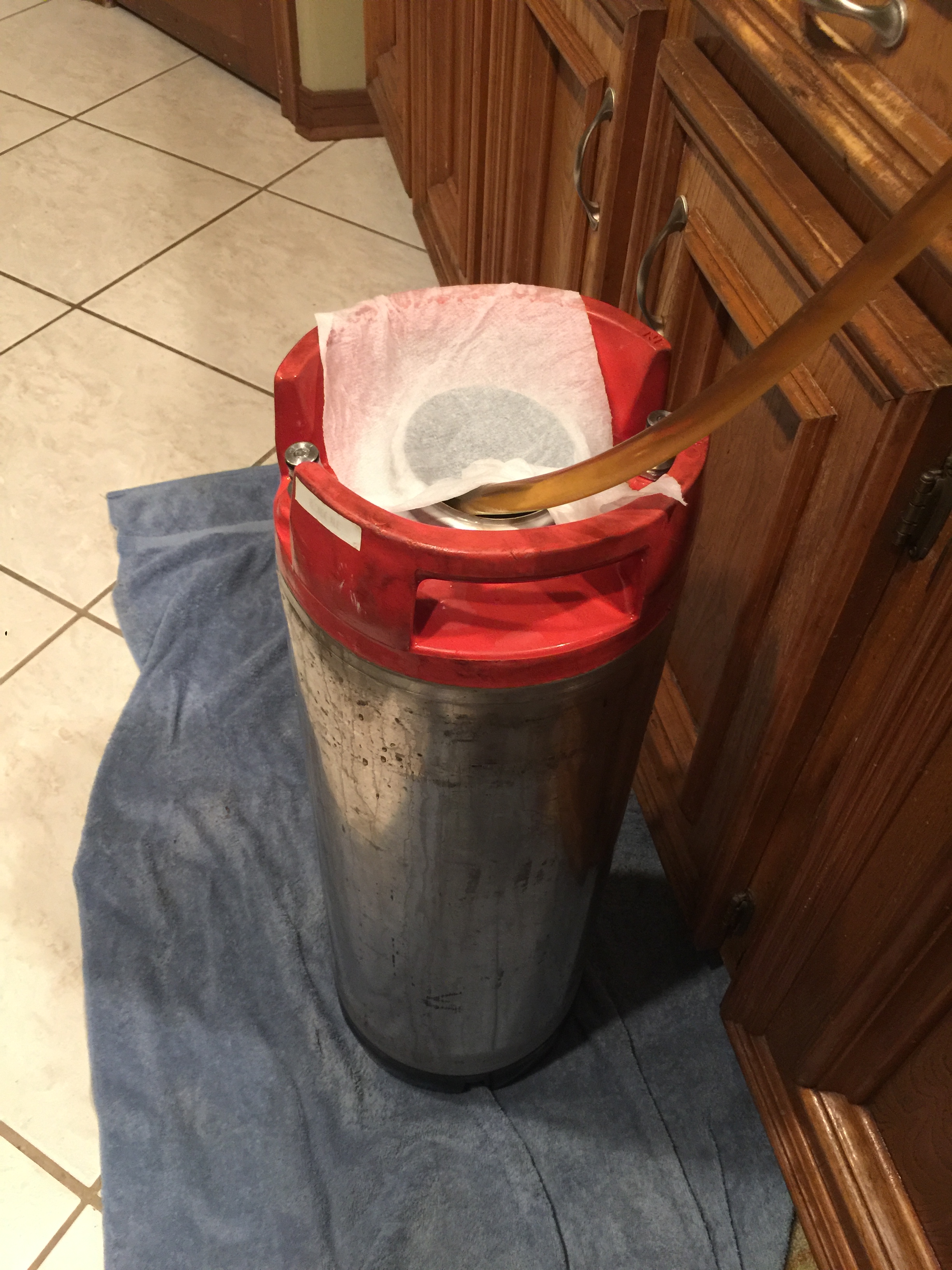
Lesson learned and a discovery. The wort was at boiling temperature when I turned the pump on and with a little research the pump suction creates a lowered pressure and likely vapor locked the pump. Lesson learned ….be patient……turn the heat off, wait a bit then turn on the pump. During cleanup there was a bit of brew trash in the discharge check valve but probably not enough to stop flow. Note to self……understand my sometimes lack of patience and chill old man!!!!!!

SMaSH – a beer brewed with a single malt and a single hop……in this case Golden Promise Malt and Simcoe hops…..Yum

Drink Local and Drink Responsibly

Bishop
Back At It Again

I apologize a bit to a beekeeping acquaintance of mine here in Texas as he has named his business “At it Again Apiaries”…….so, I just appropriated a portion of the name. That said, it has both been too long since I last brewed and also too long since I last posted. Up date, I have an Avery IPA clone sitting in the secondary, dry hopped and I started the cold crash yesterday before kegging tomorrow. The gravity targets from the recipe were hit dead on. It was 1.056 for the starting gravity and 1.012 for the ending gravity…….sample tasted wonderful.

Sadly my local beer supply store closed a few months ago and I have resorted to online ordering. The online experience has been hit or miss. I have tried Austin Homebrew Supply and Northern Brewer. The excuses revolve around labor shortages and supply chain issues……I am more concerned about having room in my kegerator for two more beers so, I am learning to be more patient. Tomorrow I should be carbonating the Avery clone but the next beer, or should I say planned beer is a SMaSH with Golden Promise grain and Simcoe hops…….dangit…..may not get it started until sometime next week. That is if the remaining ingredients show up.

I hate to say it but part of the delay is my fault. The grain bill calls for 12 pounds of Golden Promise, in the drop down box I apparently did not click hard enough on 12 and they order went out as 1 pound. I did have a second chance to review my order at checkout, but guess what, senior moment, and I did not correct my mistake. So I have compounded the delivery issues……nuff said and you can stop giggling any time you want!

The Avery clone was an all grain kit from Austin Homebrew Supply…..they did a decent job getting the supplies here on a reasonable amount of time. A browse through the products section does highlight notable amounts of “out of stock” tags but over all not too bad. I did resort to going to the “Grainfather” site for parts I needed before brewing the Avery clone. The connections on the inlet to the pump and discharge side of the pump had gone bad. Fortunately the discharge tube leaked badly as I was cleaning and prepping and not during the brewing process, averting a catastrophic event!. It delayed the Avery IPA clone by about a week.

Final Gravity…..Dead on Target – Love my new hydrometer…..yes, I dropped and broke one…..word of advice, always have two in your brewing kit. Fortunately I did.
Dry Hopped and I cold crash everything should settle out. One of these days….I dream of having a dedicated brewing area and use SS conical fermenters and a well sized walk in cold box and a 10 tap kegerator andddddd so much more!

I will promise to update all y’all in a timely matter once in the keg and properly carbonated….and wish I could share some with y’all – you will just have to rely on my words and your imagination. Trust me…

Drink Local and Drink Responsibly

Bishop

An IPA Start to my Birthday

Maybe I should have waited! Oops

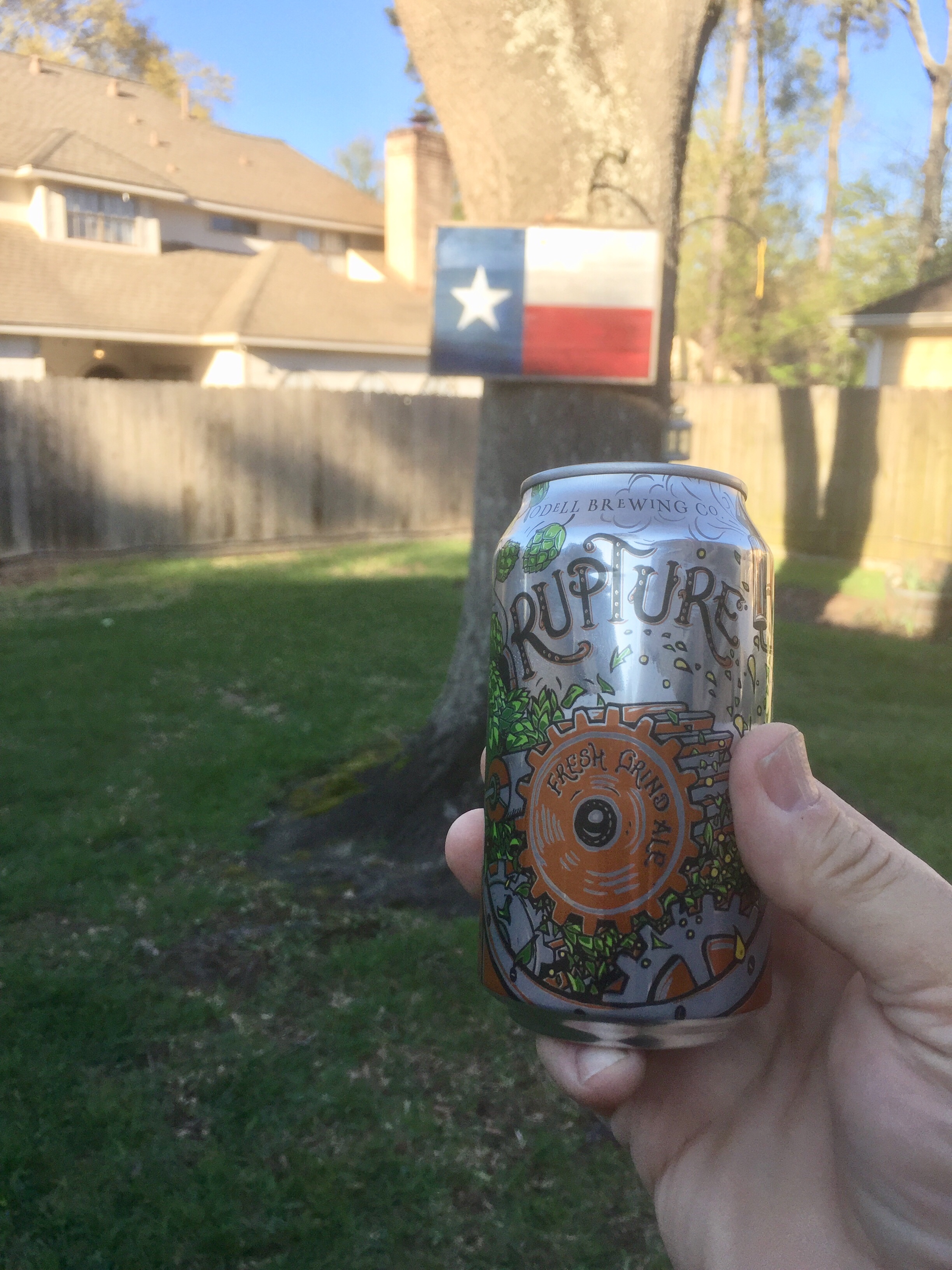
My SMaSH Mosaic IPA. First beer to start the evening. Then an Odell’s Fresh Grind IPA…. Wow! Then a Sierra Nevada Hop Hunter with distilled Hop oil. Gotta love a Texas Backyard Birthday!

Then a nice slab of salmon with pesto butter!

And what a great treat- the family searched far and wide and found 5 – six packs of Hopslam! I am in heaven. Gotta find a cold and secret place to store them.

Thanks Lisa for a card that made me cry!

Dessert? Carrot cake and –

Very yummy!

It is not so bad to be two years beyond Medicare age!

Maybe a Hopslam night cap?????

Drink Local and Drink Responsibly

Bishop
Honey, I Started the Honey Blonde

I have been in trouble since the moment I began sharing my wife’s Honey Blonde Ale, close to a year now! Really not hers but, I made it using some of the dark honey we harvested last year. She liked the honey so well that she took 6 pounds of the dark amber sweetness and hid it from the sales batches. I have been given very direct instructions for this batch……I am not allowed to give any of this beer away! I need to have my daughter Lisa share in some of the blame. She took a 6 pack to one of her trail races and addicted a couple of her friends. They were rewarded a couple of times.

This beer is an all grain brew, currently in the primary fermenter and probably ready to rack over to the secondary. The brew process,  a 90 minute boil, went very smooth. The starting gravity came out dead on to the expected number. The sample pulled for the gravity test, tasted pretty damned awesome.

Recipe;

Honey Blonde-p1

Details from the Beersmith Software. Whenever I read to sparge volumes I think – That can’t be right….to much water. At he end of the 90 minute boil it was a nearly perfect 5 gallons.

I will Bottle in another 7 days and should make my wife happy by mid August. Let me take that back, I always make her happy, she will be “happier” when this beer is ready  and happiest if I don’t share any……she can make that choice!

Drink Local and Drink Responsibly,

Bishop

PS: My son Joe sent a text message as I was writing this post from Ranger  Creek Brewery and Distillery, San Antonio TX. Another one to add to my list.

Honey Blonde Ale – One Step Closer

I racked the Honey Blonde from the primary to the secondary fermenter this morning. I was a few days tardy but it should not hurt the final product. I hope to bottle over the weekend and sit back and enjoy a cold one on or around October 17/18. 

The hydrometer reading indicates that fermentation is complete so I will let the beer clear up in the glass carboy secondary for a few days, chill, then bottle. ABV calculates at 5.64%. Not an all day session beer but very nice. I drank the sample I pulled – can’t let it go to waste! 

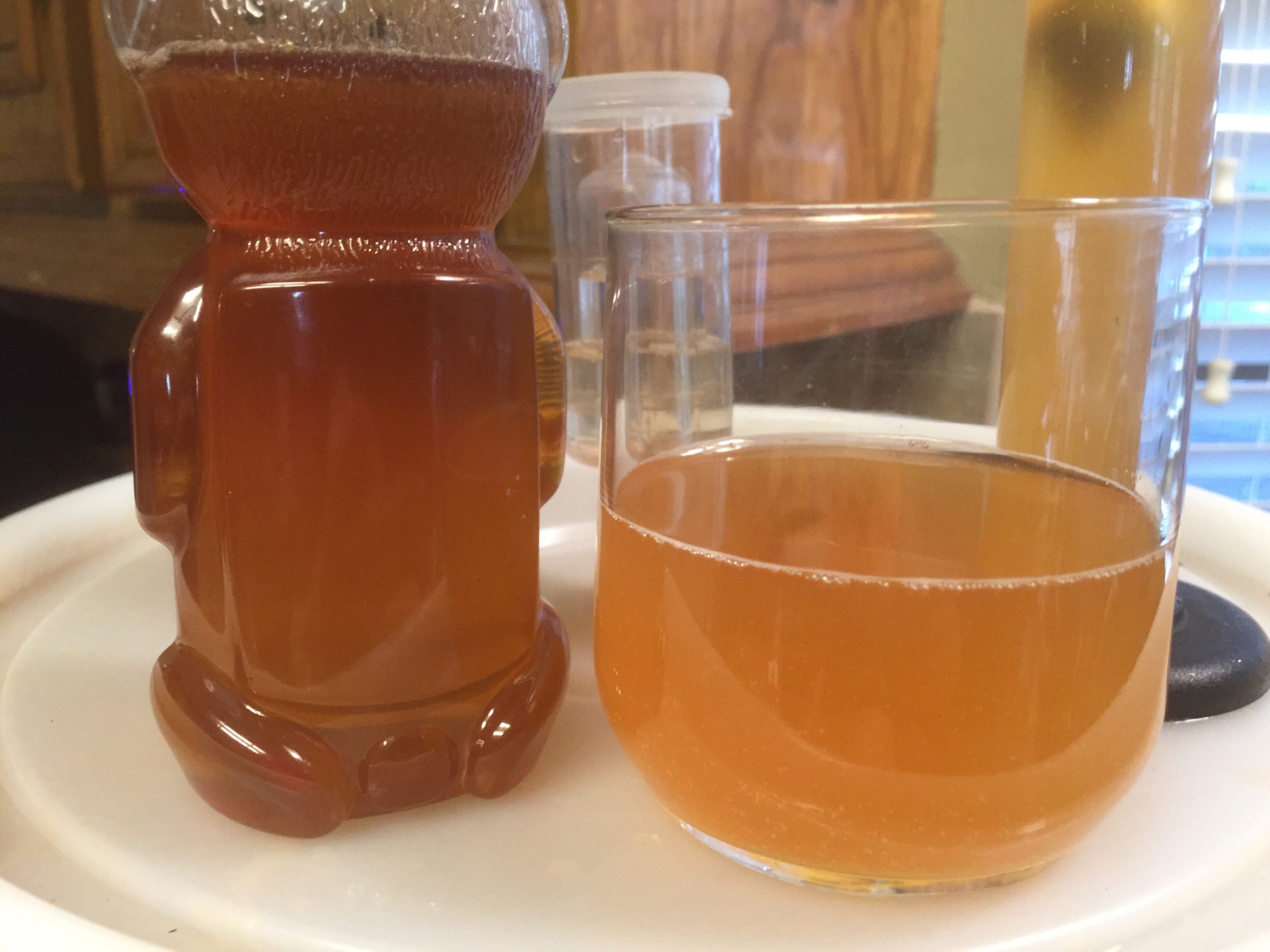
Color is nice – like a light honey color…. Go figure. Yes, a bit of sweetness in the flavor and a pleasant after taste. 

  From left to right, my honey in a squeeze bear, a bit of the extra sample I pulled and the hydrometer sample back right. The honey color is definitely evident.  The beer should clear up nicely in the next few days….. I will keep all y’all updated. 
Drink Local and Drink Responsibly 

Bishop